Oceania · Australia
Tasmania
Australia's wild island, where end-of-the-earth landscapes meet a quietly exacting table.
Plan this trip →- Suggested stay
- from 5 · 8 ideal · up to 12 nights
- Currency
- Australian Dollar (AUD)
- Language
- English
- Best season
- Late spring through early autumn (November to April) brings the longest days, the warmest sea, and the full slate of guided walks and cruises; the wukalina Walk and most premium lodge experiences run September to May. Summer (December to February) is peak — book lodges six to twelve months ahead. Winter (June to August) is the season of Dark Mofo, log fires, truffles, and aurora australis on clear southern nights, with the wilderness at its most austere and the crowds gone.
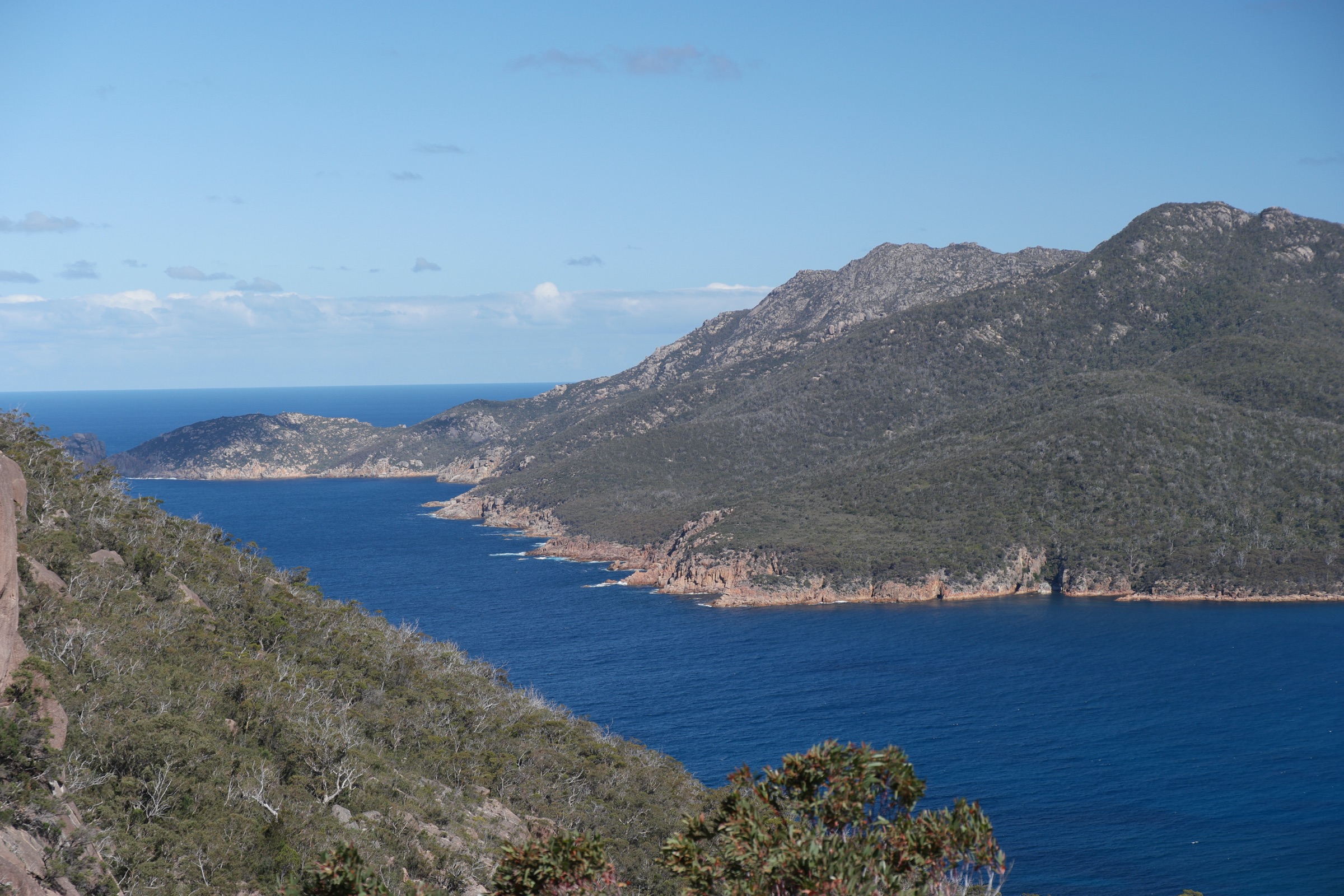
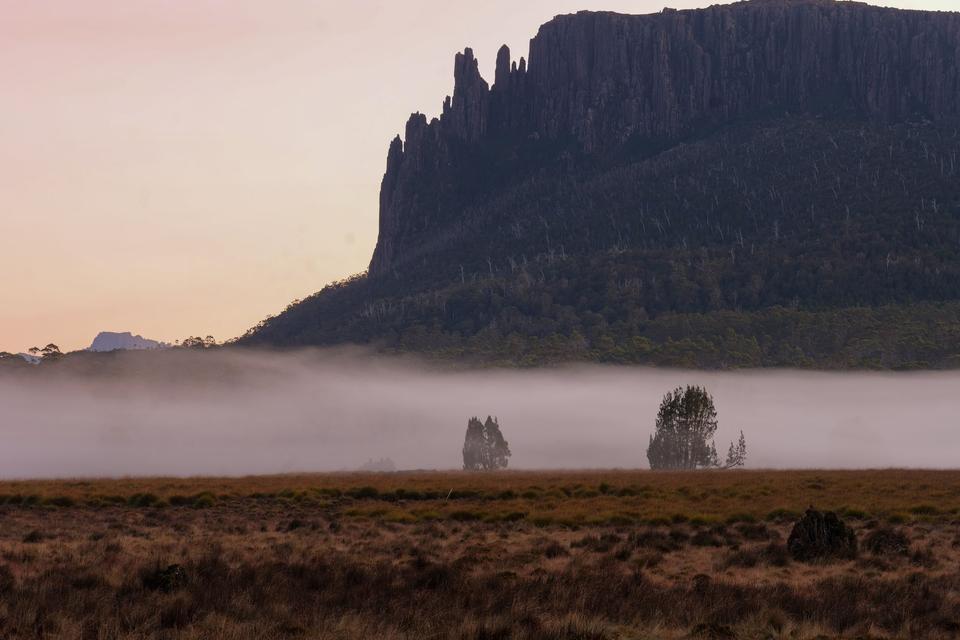
Tasmania sits below the fortieth parallel, a heart-shaped island cut loose from the Australian mainland by the Bass Strait and pointed at Antarctica. Roughly two-fifths of it is national park, World Heritage wilderness or reserve — a landscape of dolerite peaks, tannin-dark rivers, button-grass plains and a coastline that alternates white sand against orange lichen. The air, blown clean across the Southern Ocean, is among the purest measured anywhere. For the traveller who values the rare over the loud, the island’s appeal is precisely its remoteness and its restraint.
What lifts Tasmania beyond scenery is the calibre of what has been built into it. The Museum of Old and New Art, David Walsh’s subterranean provocation on the Derwent, single-handedly rewired the island’s cultural standing and remains one of the most arresting private collections in the world. Around it, Hobart has quietly become one of Australia’s most serious food cities, while Launceston — now a UNESCO City of Gastronomy — anchors a cool-climate wine country producing the country’s finest sparkling and some of its most precise pinot noir. The cooking trades on proximity: oysters pulled from the bay an hour before service, wallaby and lamb from the next valley, cheese and whisky from a single island offshore.
Luxury here is wilderness luxury, in the established Australian lodge idiom: a small number of exceptional addresses set into extraordinary places. Saffire Freycinet looks across Great Oyster Bay to the Hazards; Pumphouse Point hangs over the still water of the state’s deepest lake; Thousand Lakes Lodge runs entirely off-grid on the Central Plateau. The point is never the marble but the setting, the table, and the guided access to country that cannot be reached alone — culminating in the palawa-led wukalina Walk through the Bay of Fires, the most meaningful cultural experience on the island.
It rewards time and a degree of self-direction. There are no international hotel flags here and little in the way of logo-driven shopping; arrival is via Melbourne or Sydney, then a short hop to Hobart or Launceston, ideally a private transfer or charter onward. Five days is the minimum to do more than skim; eight allows the East Coast, the wilderness west, the wine north and Hobart its proper due. For the discerning, that quietness is not a shortcoming but the entire proposition.
Ideal for
Discerning travellers who treat the journey itself as the indulgence · Food and cool-climate wine devotees · Wilderness walkers who want the trail without the deprivation · Collectors and the culturally curious drawn by MONA
In view
The Setting
Where to stay
The Houses
Saffire Freycinet
Federal Group · Coastal wilderness lodge · Coles Bay, Freycinet Peninsula (East Coast)
Twenty glass-fronted suites curve along a low ridge above Great Oyster Bay, framed by the pink-granite Hazards and looking toward the Freycinet Peninsula. All-inclusive in the Australian lodge tradition, it pairs a serious kitchen with guided experiences and an unhurried, low-density calm. A separate 800m² villa, the Saffire Jewel, is slated to open late 2026 for families and small groups.
Why The most complete luxury address in Tasmania, and the rare lodge where the architecture, the table, and the landscape are all of one calibre.
The Pavilions at Mona
Mona (David Walsh) · Design-led waterfront villas · Berriedale, on the Mona estate, north of Hobart
Eight cantilevered pavilions in private waterfront bushland on the grounds of the Museum of Old and New Art, each named for an Australian artist or architect and hung with works from David Walsh's collection. Interiors mix bespoke Tasmanian furniture with pieces by Starck, Urquiola and Arad. Stays include after-hours priority access to the museum and breakfast at the estate restaurant.
Why Nowhere else can you sleep inside the collection — staying on the Mona estate is the only way to have the museum, and its art, to yourself.
The Henry Jones Art Hotel
Waterfront art hotel · Hunter Street, Hobart waterfront
Australia's first dedicated art hotel occupies a row of 1820s sandstone warehouses and the former IXL jam factory on the Hobart docks. Fifty-odd rooms preserve hand-cut sandstone, timber beams and original ironwork, set against a rotating collection of contemporary Tasmanian art. The waterfront location puts Salamanca, the museums and the harbour boats at the door.
Why The most characterful base in Hobart — heritage fabric, a living art collection and the waterfront at its threshold, listed in the Michelin hotels selection.
Pumphouse Point
Lakeside wilderness retreat · Lake St Clair, Cradle Mountain–Lake St Clair National Park
A 1940s art-deco hydro-electric pumphouse stranded 250 metres out on a flooded jetty in the heart of Tasmania's deepest lake, reached on foot down its own causeway. Rooms in the Pumphouse and the shorefront Shorehouse are deliberately device-light, with an honesty larder and a communal table. Solitude is the entire proposition.
Why An adaptive-reuse original with a setting no purpose-built lodge could buy — chronically booked out months ahead for good reason.
Stillwater Seven
Boutique riverside rooms with destination table · Ritchie's Mill, Tamar River, Launceston
Seven suites above a converted 1830s flour mill on the bank of the Tamar at the edge of Launceston, the city now designated a UNESCO City of Gastronomy. Handmade furnishings and moody tones sit a floor above one of the state's most awarded restaurants. The ideal northern base for the Tamar Valley wine route.
Why Rooms and a serious kitchen under one roof in the heart of cool-climate wine country, with the Tamar Valley cellar doors minutes away.
Thousand Lakes Lodge
Off-grid highland lodge · Liawenee, Central Plateau, near Walls of Jerusalem National Park
A former Antarctic-expedition training base reborn as a nine-room off-grid lodge on the banks of Lake Augusta in Tasmania's remote Central Plateau. Whitewashed rooms, an enormous lounge and an open fire anchor days spent fly-fishing, hiking and wildlife-spotting. No Wi-Fi and limited phone coverage are the point.
Why The most authentic wilderness immersion of the group and Tasmania's premier base for trout — remote in a way the coastal lodges are not.
Where to dine
The Tables
Dier Makr
Contemporary tasting menu · Intimate fine dining
A tight, boundary-pushing seasonal tasting menu with serious cocktails and a low-intervention wine list — among the most quietly ambitious cooking in the state.
Templo
Italian-leaning, seasonal · Small-plate communal dining
A handful of seats, a short daily menu of handmade pasta and vegetable cookery, and a near-impossible booking — the locals' choice for proof Hobart can cook.
Fico
Italian with Japanese accents · Restaurant
Oskar Rossi and Federica Andrisani fold Italian craft and Japanese precision around Tasmanian produce — technical, personal and consistently among Hobart's best.
Stillwater
Modern Tasmanian tasting menu · Destination restaurant
Launceston's benchmark table, with multi-course tasting menus built on northern Tasmanian produce and rooms upstairs should the wine list win.
Faro Bar + Restaurant
Contemporary share plates · Museum restaurant and bar
Dining inside a James Turrell light installation, with share plates and the run of Mona's cellar — atmosphere no conventional restaurant can match.
Aloft
Modern Australian, seafood-led · Waterfront fine dining
Perched above the pier with the full sweep of Sullivans Cove, it turns raw Tasmanian seafood and produce into a refined, seasonal menu.
Josef Chromy Restaurant
Cool-climate estate dining · Winery restaurant
The Tamar Valley's most polished cellar-door lunch — estate pinot and sparkling matched to a hatted kitchen, in gardens above the vines.
What to do
Experiences
After-hours private access to Mona
Priority/after-hours access for estate guests; private guided tours by arrangementCultural
Australia's largest private museum, David Walsh's subterranean three-storey labyrinth of antiquities and provocative contemporary art at Berriedale. Pavilion guests receive priority and after-hours entry; private curator-led tours and the estate's Moorilla winery, Faro bar and ferry round out a half-day or more.
Why The single cultural reason many travellers come to Tasmania — and far more potent experienced without the daytime crowds.
wukalina Walk
Small-group, palawa-led; departs select dates September to MayCultural wilderness walk
A four-day, three-night guided walk through wukalina (Mount William) and larapuna (the Bay of Fires), the only Aboriginal-owned and -operated multi-day walk in Tasmania. Palawa guides share storytelling, kelp-basket weaving and smoking ceremonies; nights are spent in the architect-designed krakani lumi standing camp and a restored lighthouse keeper's cottage at Eddystone Point.
Why The most meaningful cultural experience in the state, on Country, told by its custodians — quietly transformative and entirely without substitute.
Wineglass Bay scenic helicopter flight
Private charter; remote-beach landings on requestAerial
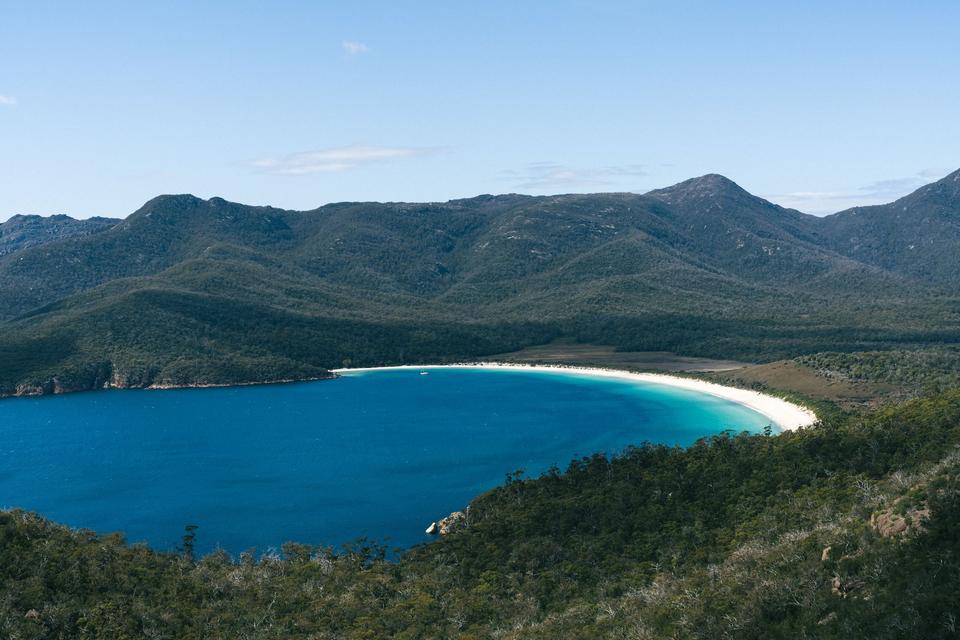
A private helicopter run over the Freycinet Peninsula, the orange-lichened Hazards and the perfect arc of Wineglass Bay, with the option to set down on a remote beach or continue to a lodge landing. Arranged through Saffire and Freycinet-based operators.
Why Wineglass Bay's sweep only fully reveals itself from the air — the most efficient way to grasp the East Coast's scale and colour.
Gordon River wilderness cruise from Strahan
Premium upper-deck seating; air charter day-trip option from HobartWilderness cruise
A glide up the tannin-dark, mirror-still Gordon River into the Tasmanian Wilderness World Heritage Area, with landings at Heritage Landing rainforest and the penal ruins of Sarah Island in Macquarie Harbour. Premium upper-deck and small-group window seating available; reachable as a fly-in day from Hobart.
Why The most accessible way into Tasmania's roadless southwest wilderness, through reflections and rainforest found almost nowhere else on earth.
Bruny Island wilderness cruise and gourmet day
Small-group cruise; private seaplane charter from HobartMarine and culinary
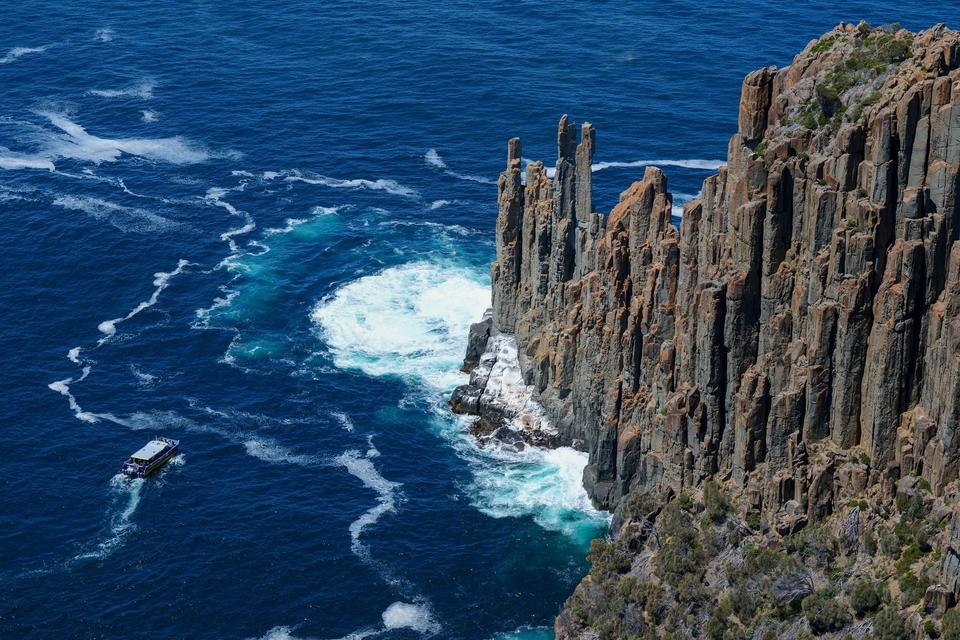
A three-hour eco cruise along Bruny Island's towering dolerite sea cliffs, blowholes and seal colonies on the edge of the Southern Ocean, paired with the island's oysters, cheese, whisky and cool-climate produce. Private seaplane transfer from the Hobart waterfront is the elegant arrival.
Why Raw Southern Ocean coastline and a serious larder in a single day, ideally bookended by a flight over the D'Entrecasteaux Channel.
Tamar Valley cellar-door circuit
Private guide/driver; by-appointment tastings and reserve flightsWine
A chauffeured day through Tasmania's cool-climate heartland north of Launceston — Josef Chromy, Pipers Brook and the sparkling and pinot specialists of the Tamar and Pipers River. Private tastings and hatted estate lunches by arrangement.
Why Tasmania makes Australia's finest sparkling and some of its most precise pinot noir; the Tamar is the place to taste it at source, unhurried.
Shopping
The Maisons
Salamanca Place, Hobart
A row of 1830s sandstone warehouses on the Hobart waterfront, now galleries, design studios and makers' shops; the Saturday Salamanca Market is the state's great open-air showcase of Tasmanian craft, produce and provenance. Strongest for artisan goods rather than international maisons.
Hobart CBD and the waterfront
The compact city grid behind Sullivans Cove holds Tasmania's design and jewellery talent — work in Tasmanian timbers, leatherwork and the prized blue-and-gold gemstones mined in the state's northeast. A craft-and-provenance destination, not a luxury-logo one.
By appointment
Private studio visits with Tasmanian furniture and woodcraft makers working Huon pine, blackwood and myrtle · Tasmanian sapphire and gemstone sourcing by appointment through Hobart jewellers
Arrival & departure
Coming & Going
Airports
Tasmania's primary gateway, with a 2,727 m runway taking aircraft up to narrow-body airliners and private jets. Direct domestic links to Melbourne, Sydney, Brisbane; limited seasonal international (NZ). No standalone luxury FBO terminal.
The northern gateway, best for the Tamar Valley, Freycinet and the central highlands; well served from Melbourne and Sydney.
General-aviation field for light aircraft, scenic flights and Par Avion charters; base for seaplane and fixed-wing wilderness day-trips.
Private terminals
- No dedicated standalone private terminal at Hobart; private jets are handled through general-aviation parking with discreet handling arranged via operators
Meet & greet · gate escort
- Lodge and private-tour operators arrange airside or kerbside meet-and-greet and luggage handling on request
First-class & arrivals lounges
- Qantas Club, Hobart Airport
- Virgin Australia lounge, Hobart Airport
Private transfers
- Private chauffeured transfers from HBA/LST to lodges and the Mona estate
- Lodge-arranged transfers (Saffire, Pumphouse Point, Thousand Lakes Lodge)
Private aviation
- Par Avion (charter and scenic wilderness flights, fixed-wing, ex Cambridge/Hobart)
- Rotor-Lift (helicopter charter and transfers, Hobart)
- Above & Beyond / regional seaplane charter from the Hobart waterfront to Bruny Island and the southwest
- Ad-hoc private-jet charter into HBA via national and international brokers
Immigration fast-track
No formal fast-track program at Hobart; the airport's small scale makes arrivals straightforward, and tour/lodge greeters expedite transfers
Good to know
Questions & Answers
When is the best time to visit Tasmania? +
Late spring through early autumn (November to April) brings the longest days, the warmest sea, and the full slate of guided walks and cruises; the wukalina Walk and most premium lodge experiences run September to May. Summer (December to February) is peak — book lodges six to twelve months ahead. Winter (June to August) is the season of Dark Mofo, log fires, truffles, and aurora australis on clear southern nights, with the wilderness at its most austere and the crowds gone.
How many nights should you spend in Tasmania? +
8 nights is the sweet spot; 5 at a minimum, and up to 12 if you want to take it slowly.
What are the best luxury hotels in Tasmania? +
The Grand Index ranks 6 houses in Tasmania. The ultra-premier tier: Saffire Freycinet. Each is bookable through our advisor at the same rate as direct, with VIP perks layered on.
Which airport do you fly into for Tasmania? +
Hobart International Airport (HBA); Launceston Airport (LST); Cambridge Aerodrome (YCBG).
Can I book Tasmania hotels through The Grand Index? +
Yes. Our advisor books every house featured here through Fora, a Virtuoso member agency, at the same rate you would pay direct — with VIP perks such as room upgrades, daily breakfast and a property credit layered on at no extra cost. Begin at the enquiry page.
Where to next
You might also like
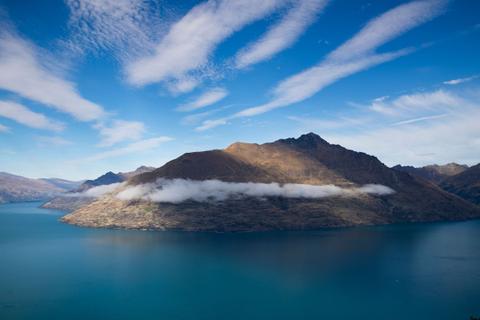
Oceania
Queenstown
New Zealand
An alpine resort town on the Southern Lakes, where adventure and quiet luxury share the same shoreline.
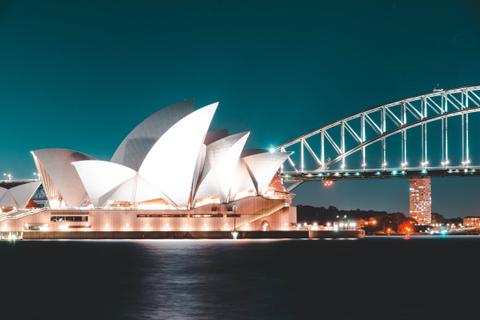
Oceania
Sydney
Australia
A harbour city where heritage sandstone, world-class produce and an open coastline meet at the water's edge.
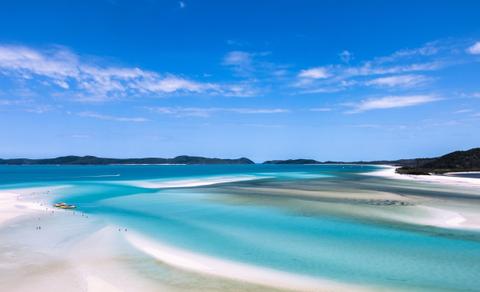
Oceania
The Great Barrier Reef (Whitsundays)
Australia
Seventy-four islands at the edge of the world's greatest reef, reached by launch, seaplane and private helicopter.