East Asia · China
Shanghai
China's most cosmopolitan city, where colonial-era Bund grandeur meets a skyline of glass and ambition.
Plan this trip →- Suggested stay
- from 3 · 4 ideal · up to 6 nights
- Currency
- Chinese Yuan Renminbi (CNY)
- Language
- Mandarin Chinese, Shanghainese, English (in luxury hospitality settings)
- Best season
- Late March to early May and mid-October to late November, when temperatures are mild, humidity is low and skies are clearest. Autumn is marginally preferable for its drier weather. Avoid the three national holiday periods — Chinese New Year (late January/February), May Day (May 1–5) and the National Day Golden Week (October 1–7) — when domestic travel peaks and the city is at its most crowded. Summer is hot, humid and prone to typhoon disruption.
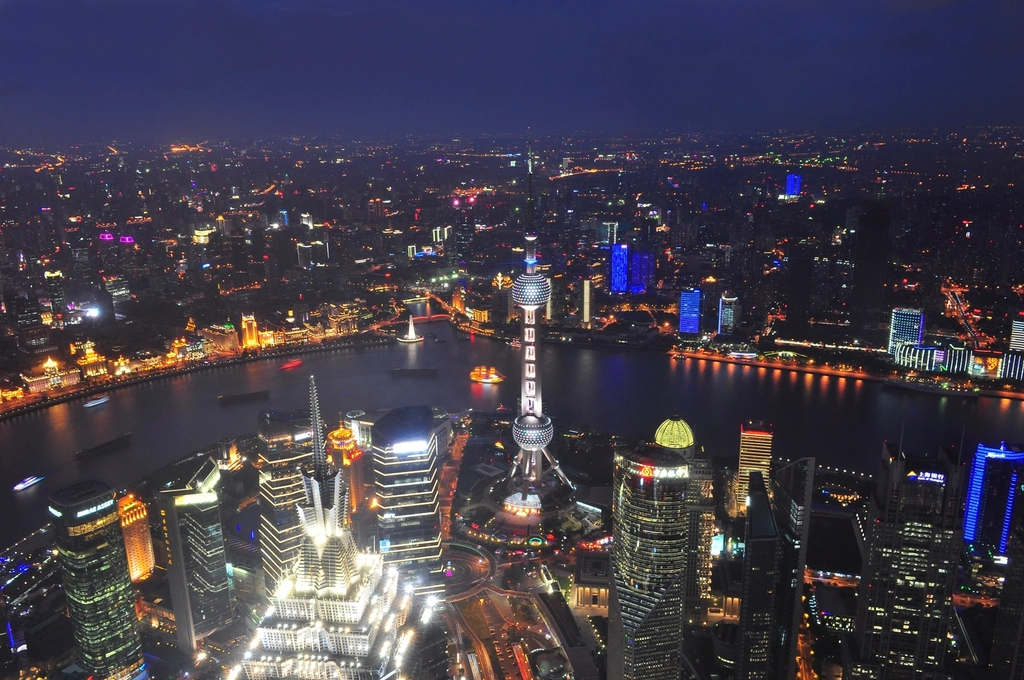
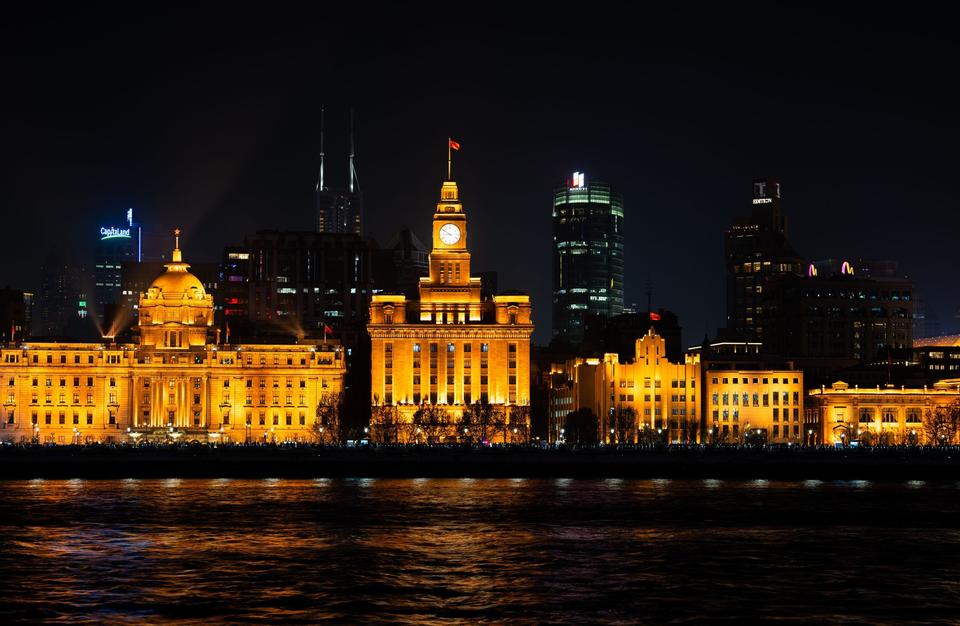
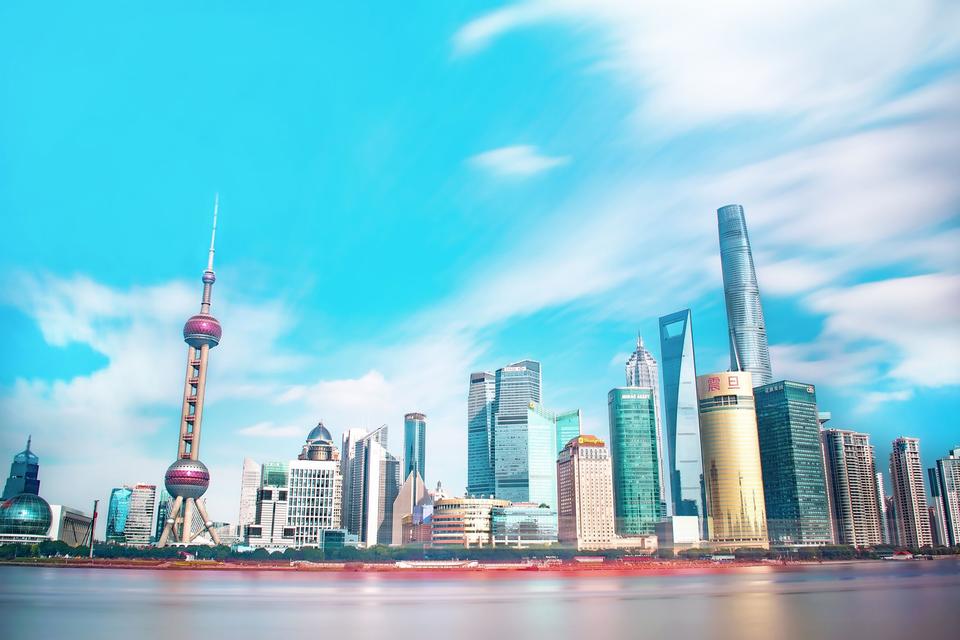
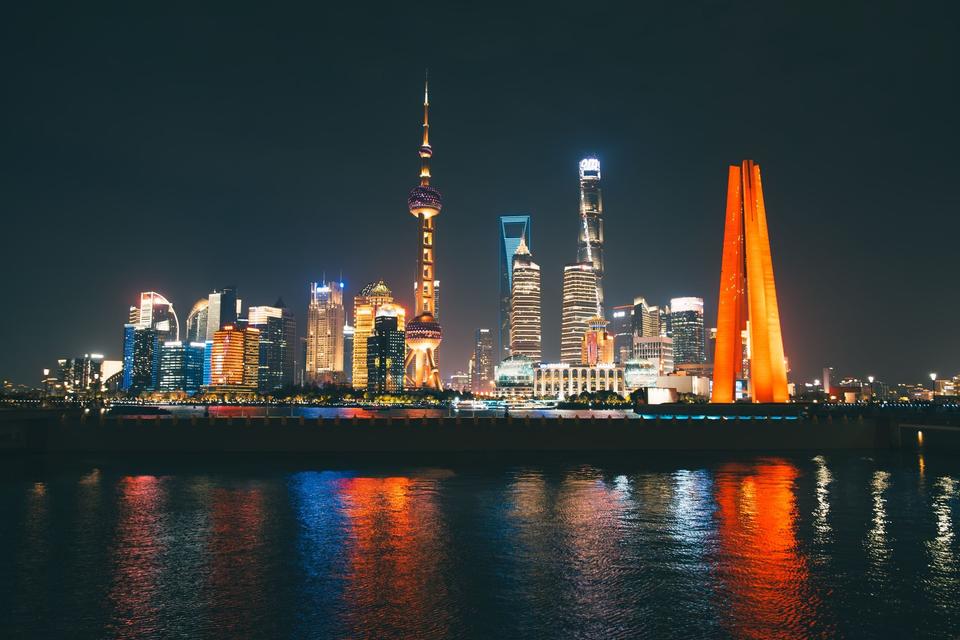
Shanghai is the most outward-facing of China’s great cities, and the one that wears its contradictions most openly. Along the western bank of the Huangpu River, the Bund presents a parade of granite banking houses and Art Deco towers — the architectural inheritance of the treaty-port century, when the city was carved into foreign concessions and run as a cosmopolitan free-for-all. Directly across the water, the Lujiazui financial district answers with a skyline assembled almost entirely since the 1990s: the Shanghai Tower, the bottle-opener silhouette of the World Financial Center, the Jinmao Tower and the Oriental Pearl. Few urban panoramas anywhere stage the dialogue between past and present quite so literally.
For the discerning traveller, the appeal lies less in monuments than in texture. The former French Concession remains the city’s most atmospheric quarter — plane-tree lanes, shikumen stone-gate houses and a low-rise calm that the rest of Shanghai has largely traded away. Jing’an layers temple and tower; Xintiandi and the West Bund chart the city’s pivot toward design, contemporary art and independent retail. This is a place to walk and to read, ideally with a guide who can unlock the interiors and the history that the facades only hint at.
The hotels are exceptional and unusually varied in character, from the Bund romance of the Peninsula and the Italian polish of the Bulgari on Suzhou Creek to Amanyangyun, a feat of cultural salvage that relocated an entire forest and forty antique houses to the city’s southern edge. The dining is the real revelation: the 2026 Michelin guide confirmed Taian Table as the city’s sole three-star table, surrounded by a deep field of two- and one-star kitchens spanning Cantonese, Italian, Jiangnan and a celebrated Zen-vegetarian tasting menu.
Shanghai rewards a stay of three to five nights — long enough to set the two riverbanks against each other, eat seriously, shop the Nanjing West Road flagships and slip out to the water towns or the gardens of Suzhou. It is best in the dry, mild windows of late spring and autumn, and best approached, as ever, with patience for the logistics of arriving in mainland China.
Ideal for
Design and architecture enthusiasts · Serious gastronomes · Repeat Asia travellers seeking the contemporary over the classic · City breaks paired with a wellness retreat
In view
The Setting
Where to stay
The Houses
Amanyangyun
Aman · Resort and wellness retreat · Minhang District, within a camphor forest roughly 30–45 minutes south-west of the centre
An extraordinary act of preservation: forty antique Ming and Qing dynasty houses and a forest of centuries-old camphor trees were relocated some 700km from Jiangxi province and reconstructed across 140 hectares. Accommodation is split between 13 restored Antique Villas and 24 contemporary Ming Courtyard Suites, each with private courtyard or pool. The result is a rural retreat that feels worlds away from the city it serves.
Why The most singular hotel in greater Shanghai — a wellness sanctuary and feat of cultural salvage rather than a city address.
Bulgari Hotel Shanghai
Bulgari Hotels & Resorts (Marriott) · Urban luxury hotel · Suzhou Creek waterfront, beside the restored 1930s Chamber of Commerce building, near the North Bund
Occupying a 48-storey tower designed by Antonio Citterio Patricia Viel, the Bulgari pairs 82 rooms and suites with one of the city's most distinctive arrival sequences through the painstakingly restored former Chamber of Commerce. Interiors are warm, materially rich and quietly confident. The riverside setting on Suzhou Creek offers a calmer alternative to the Bund crush.
Why Italian polish and serious materials in a tower address, anchored by a Michelin-starred dining room.
Dining: il Ristorante – Niko Romito (1 star)
The Peninsula Shanghai
The Hongkong and Shanghai Hotels (Peninsula) · Grand classic hotel · The Bund, on the site of the former British Consulate gardens
The only hotel built on the Bund in over seventy years, the Peninsula commands the northern end of the waterfront with 235 rooms including 44 suites, decorated in a glamorous 1920s-revival style. Rooms face either the Bund and Huangpu River or the former consulate gardens. Service is the deeply drilled Peninsula standard.
Why The definitive Bund address, combining old-Shanghai romance with a Michelin-starred Cantonese kitchen.
Dining: Yi Long Court (1 star)
Mandarin Oriental Pudong, Shanghai
Mandarin Oriental Hotel Group · Riverside urban resort · East bank of the Huangpu River, Lujiazui/Pudong, facing the Bund
A 362-room hotel set in landscaped riverside grounds on the Pudong bank, most rooms framing the Bund and city skyline through floor-to-ceiling glass. Among the most resort-like of the city-centre hotels, with generous gardens, a large spa and a strong dining roster. The Pudong setting trades the Bund's bustle for space and light.
Why The most spacious and serene of the in-city hotels, with unobstructed Bund views from the quieter bank.
Four Seasons Hotel Shanghai at Pudong
Four Seasons Hotels and Resorts · Premier business and leisure hotel · Century Avenue, Pudong financial district
A polished high-rise Four Seasons in the heart of the Pudong financial district, with 187 rooms set above the 35th floor for commanding city views. Reliable, discreet and impeccably serviced, it suits the traveller who values consistency over theatre. The top-floor Flair rooftop bar is among the city's best-positioned.
Why Quietly excellent and centrally placed for Pudong, with one of Shanghai's finest rooftop bars.
The St. Regis Shanghai Jingan
St. Regis (Marriott) · Premier urban hotel · Jing'an District, near the Jing'an Temple and Nanjing West Road shopping
A 491-room tower hotel in the Jing'an business and shopping district, delivering the signature St. Regis butler service across all rooms. Interiors lean contemporary and residential. Its strength is location — steps from the Plaza 66 luxury retail cluster and the Jing'an metro interchange.
Why The best-placed luxury base for shopping-led stays, with butler service throughout.
Where to dine
The Tables
Taian Table
3 Michelin starsContemporary European · Fine dining tasting menu
Chef Stefan Stiller's intimate counter is the city's singular three-star table and its hardest seat to secure.
Yi Long Court
1 Michelin starCantonese · Hotel fine dining
Refined Cantonese in a 1930s-nobleman setting at the Peninsula, with private salons and a chef's table.
8½ Otto e Mezzo BOMBANA
2 Michelin starsItalian · Fine dining
Umberto Bombana's white-truffle-driven Italian cooking, the Shanghai sibling of his Hong Kong three-star.
Fu He Hui
2 Michelin starsChinese vegetarian · Fine dining tasting menu
A meditative, Zen-influenced vegetarian tasting menu unlike anything else in the city.
T'ang Court
2 Michelin starsCantonese · Hotel fine dining
Classical Cantonese executed at the highest level inside The Langham, Xintiandi.
il Ristorante – Niko Romito
1 Michelin starItalian · Hotel fine dining
Three-star chef Niko Romito's distilled, ingredient-led Italian cooking at the Bulgari Hotel.
Jin Xuan
1 Michelin starCantonese · Hotel fine dining
Polished Cantonese on the 53rd floor of The Ritz-Carlton Shanghai, Pudong, with skyline views.
What to do
Experiences
Private yacht charter on the Huangpu River
Private hire with guide and transferPrivate charter
A privately chartered evening cruise down the Huangpu, taking in the illuminated Bund waterfront on the west bank and the Lujiazui skyline — the Oriental Pearl Tower, Shanghai Tower, Jinmao Tower and the World Financial Center — on the east. Charters depart from a private yacht club with transfer and an optional dedicated guide narrating the Bund's international-architecture heritage.
Why The two skylines are best understood from the water, away from the crush of the public-promenade crowds.
Private architectural walking tour of the Bund and former French Concession
Private guide, by arrangementPrivate guide
A specialist guide traces Shanghai's layered history through the granite banking houses of the Bund and the plane-tree-lined lanes, shikumen courtyards and Art Deco villas of the former French Concession. The route can include interior access to heritage buildings not generally open to walk-in visitors.
Why Shanghai's story is written in its buildings; an expert guide unlocks interiors and context the casual visitor misses.
Day excursion to the water towns of Zhujiajiao or Suzhou
Private car and guidePrivate excursion
A chauffeured day trip from the city to the canal town of Zhujiajiao on Shanghai's outskirts, or further to the classical scholar-gardens of Suzhou — a UNESCO World Heritage ensemble of Ming and Qing landscape design. Private boat rides and garden access are arranged ahead.
Why A measured counterpoint to the high-rise city, in gardens that defined the Chinese aesthetic ideal for centuries.
Helicopter transfer and skyline flight
Private charter, advance clearance requiredHelicopter
Point-to-point helicopter transfer between the airports and the city, or a scenic rotation over the Huangpu bend and Lujiazui financial cluster. Subject to mainland airspace clearance, which is tightly controlled and must be arranged well in advance.
Why The fastest way past Shanghai's notorious traffic, and an unrivalled vantage on the skyline — when clearance permits.
Acrobatics or stagecraft at a private box
Premium box, by arrangementCultural performance
Shanghai's acrobatics troupes are among the finest in China; an arranged premium box or pre-show backstage access turns a celebrated spectacle into a private occasion. Concierge teams at the leading hotels coordinate seating and transfers.
Why A long-standing Shanghai tradition delivered at world-class technical level, best experienced from the front.
Private contemporary-art itinerary at West Bund and the Power Station of Art
Curator-led, by appointmentPrivate guide
A curator-led circuit of Shanghai's gallery district along the West Bund — including major private museums and the Power Station of Art, China's first state-run contemporary museum — with introductions arranged at galleries and, where possible, private viewings.
Why Shanghai has become mainland China's contemporary-art capital; a curator opens doors and frames a fast-moving scene.
Shopping
The Maisons
Nanjing West Road and Plaza 66
Shanghai's premier luxury shopping spine, anchored by Plaza 66 (Hang Lung) in Jing'an. The mall houses flagship boutiques across more than 100 luxury houses, including a vast Chanel flagship — among the brand's largest worldwide, with the complete fashion, watches, jewellery and beauty ecosystem under one roof.
The Bund and Rockbund
The historic waterfront and the Rockbund quarter behind it blend heritage architecture with high-end retail, watch boutiques and destination dining. Bund 18 and adjacent heritage buildings host flagship maisons in restored colonial-era interiors.
Xintiandi and the former French Concession
A restored shikumen (stone-gate) quarter and the surrounding concession lanes, where the mood shifts from monumental flagship to independent designer boutiques, concept stores, ateliers and cafés. The most rewarding district for discovery rather than logo-led shopping.
By appointment
VIP salon appointments at the Chanel and other flagship boutiques in Plaza 66 · Private viewings arranged via hotel concierge at Bund watch and jewellery maisons
Arrival & departure
Coming & Going
Airports
The principal long-haul international gateway. Private and executive arrivals clear customs, immigration and quarantine at the dedicated VVIP H facility; the airport offers private-jet overnight parking. Connected to the city by the Maglev and Metro Line 2.
Closer to the Jing'an and Changning business districts and handling mostly domestic and regional traffic. The preferred gateway for business aviation, with a dedicated FBO, integrated customs/immigration/quarantine and VIP lounge — though apron parking is limited and not guaranteed.
Private terminals
- Pudong (PVG): VVIP H facility for private/executive arrivals
- Hongqiao (SHA): dedicated FBO with VIP lounge and CIQ processing — mainland China's first private-jet facility
Meet & greet · gate escort
- Hotel concierge and VIP meet-and-greet on arrival
- FBO/handler reception at Hongqiao for private aviation
First-class & arrivals lounges
- First and business airline lounges at both airports
- Private FBO lounge at Hongqiao
Private transfers
- Hotel-arranged chauffeured cars (Peninsula maintains a Rolls-Royce fleet)
- Maglev plus private onward car from Pudong for speed past traffic
Private aviation
- Hongqiao (SHA) is the preferred business-aviation gateway; Pudong (PVG) offers overnight parking
- Mainland China overflight and landing permits require advance lead time; crew and passenger manifests at Pudong must be finalised the day before operation
Immigration fast-track
Fast-track immigration is available via FBO handlers for private aviation, and hotel and concierge teams can arrange expedited arrival assistance on commercial flights.
Good to know
Questions & Answers
When is the best time to visit Shanghai? +
Late March to early May and mid-October to late November, when temperatures are mild, humidity is low and skies are clearest. Autumn is marginally preferable for its drier weather. Avoid the three national holiday periods — Chinese New Year (late January/February), May Day (May 1–5) and the National Day Golden Week (October 1–7) — when domestic travel peaks and the city is at its most crowded. Summer is hot, humid and prone to typhoon disruption.
How many nights should you spend in Shanghai? +
4 nights is the sweet spot; 3 at a minimum, and up to 6 if you want to take it slowly.
What are the best luxury hotels in Shanghai? +
The Grand Index ranks 6 houses in Shanghai. The ultra-premier tier: Amanyangyun, Bulgari Hotel Shanghai, The Peninsula Shanghai, Mandarin Oriental Pudong, Shanghai. Each is bookable through our advisor at the same rate as direct, with VIP perks layered on.
Which airport do you fly into for Shanghai? +
Shanghai Pudong International Airport (PVG); Shanghai Hongqiao International Airport (SHA).
Can I book Shanghai hotels through The Grand Index? +
Yes. Our advisor books every house featured here through Fora, a Virtuoso member agency, at the same rate you would pay direct — with VIP perks such as room upgrades, daily breakfast and a property credit layered on at no extra cost. Begin at the enquiry page.
Where to next
You might also like
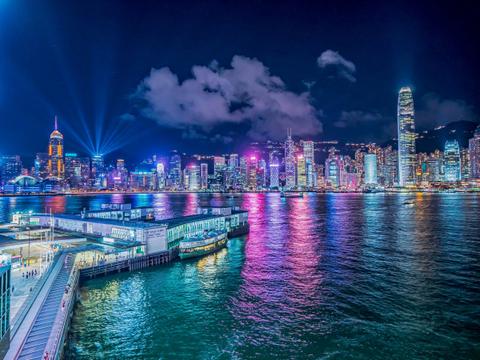
East Asia
Hong Kong
Hong Kong
A vertical city of harbour light, Cantonese mastery and quiet old-world service.
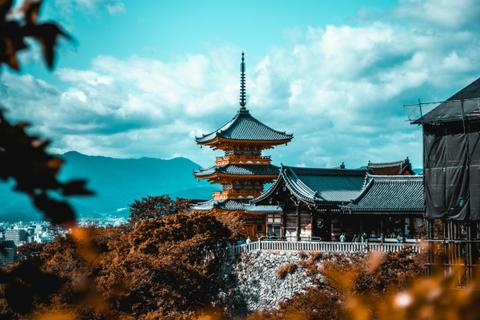
East Asia
Kyoto
Japan
The old capital, where imperial refinement and the world's deepest culinary tradition keep their own quiet hours.
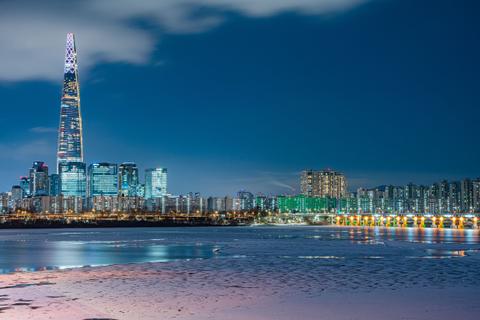
East Asia
Seoul
South Korea
A capital where dynastic palaces, mountain ridgelines and a fearless modern kitchen share the same skyline.