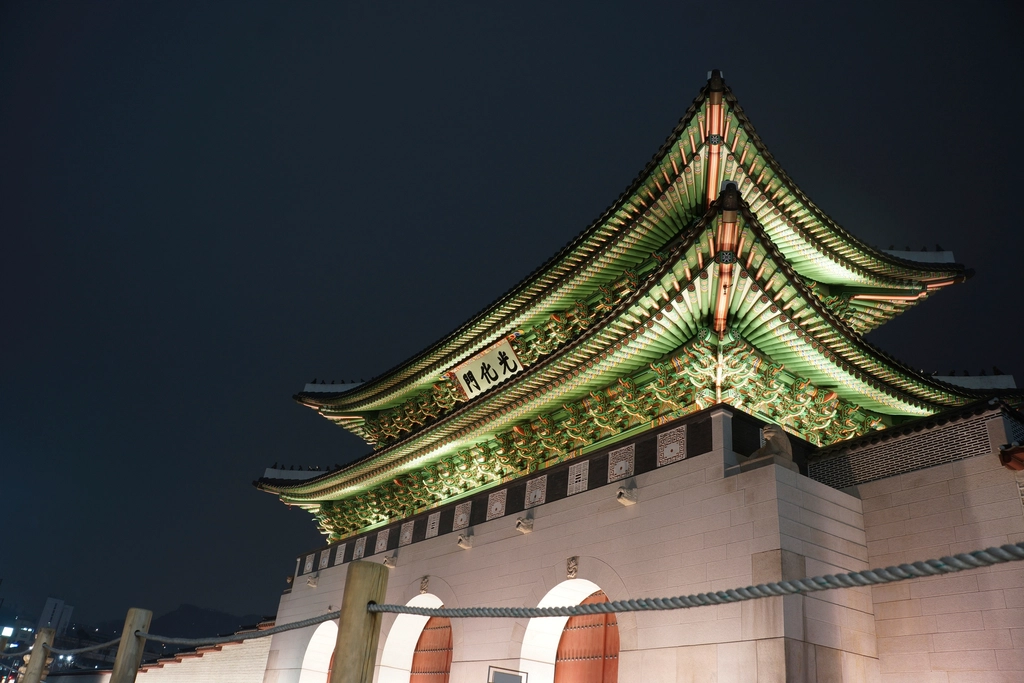
East Asia · South Korea
Seoul
A capital where dynastic palaces, mountain ridgelines and a fearless modern kitchen share the same skyline.
Plan this trip →- Suggested stay
- from 3 · 5 ideal · up to 7 nights
- Currency
- South Korean won (KRW)
- Language
- Korean, English (widely used in hotels and fine dining)
- Best season
- Late September through early November, when the humidity breaks and the foliage on Bukhansan and around the palaces turns; mid-April for cherry blossom and mild, clear days. July and August are hot and monsoon-wet; December to February are cold and dry but uncrowded, and best for spa-led, indoor-leaning itineraries.
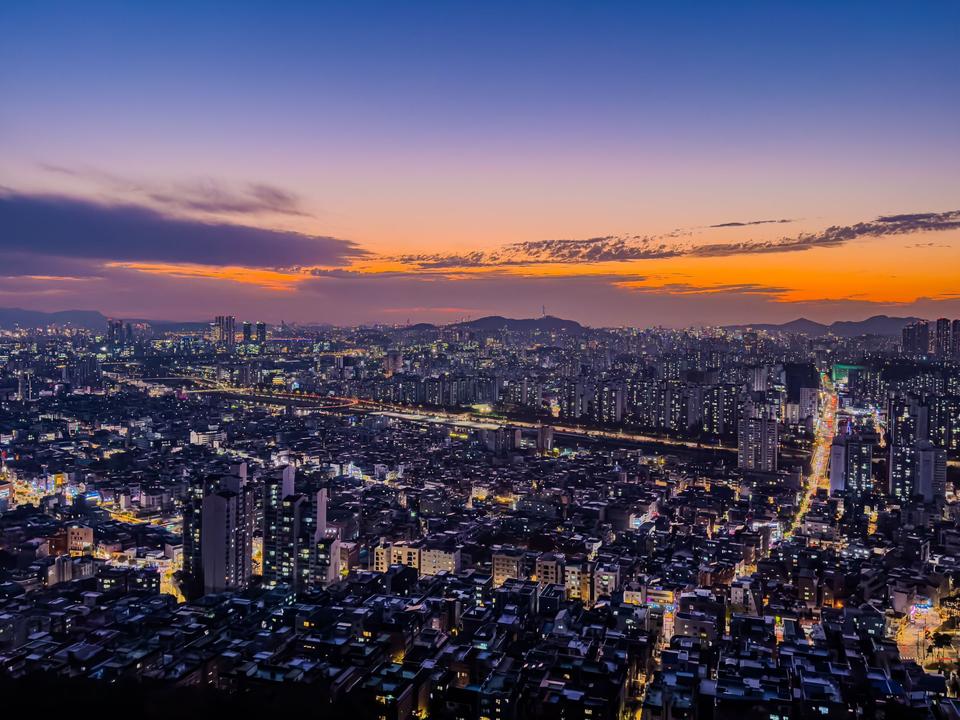
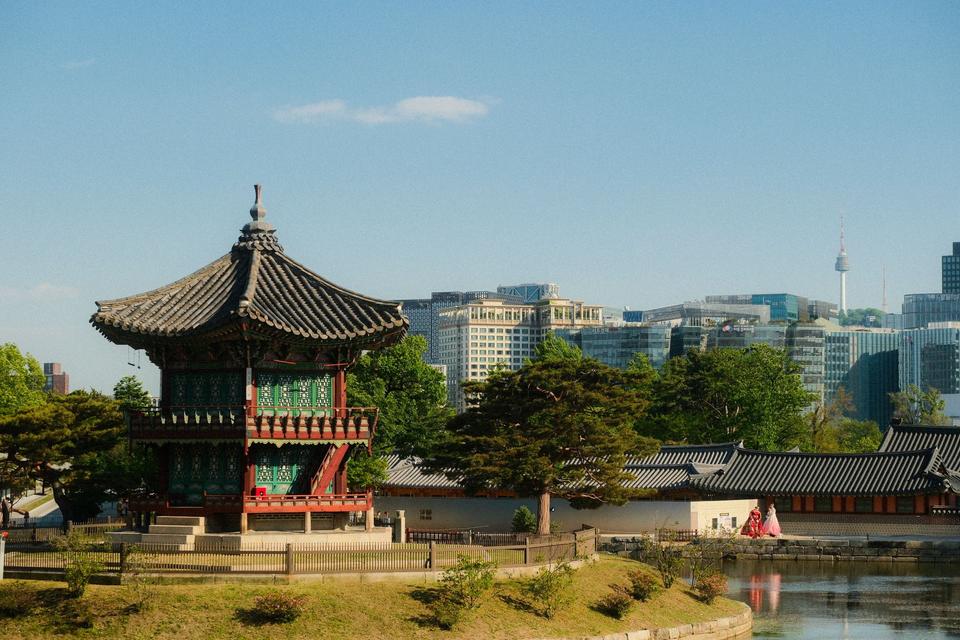
Seoul rewards the traveller who arrives without a fixed idea of what a great Asian capital should look like. It is a city of abrupt, fertile contrasts: granite mountains pressing in on a metropolis of twenty-five million, six-hundred-year-old palaces sitting a block from glass towers, and a culinary culture that has, in barely a decade, vaulted into the front rank of the world’s dining cities. The pleasures here are less about a single iconic view than about register — the quiet of a hanok courtyard, the hush of a two-star tasting room, the engineered calm of a sky lobby twenty-four floors up.
The food is reason enough to come. The MICHELIN Guide Seoul & Busan 2026 crowns Mingles as the country’s sole three-star restaurant, with chef Kang Min-goo’s fermentation-led cooking now the defining statement of modern hansik. Beneath it sits a deep two-star bench — Jungsik, La Yeon, Evett and the reborn Mosu among them — and a one-star field that ranges from Cantonese rooms styled after 1920s Shanghai to kitchens perched eighty floors above the river. No city in Asia is moving faster, and the best seats are booked weeks out the moment reservation lines open.
Geography organises a visit. North of the Han, around Gwanghwamun, lie the palaces, the museum quarter and the historic core, best worked from a central base. South of the river, Gangnam and Cheongdam hold the couture flagships, the Galleria luxury hall and the newest design-led hotels. Between and above it all runs an unusually generous natural seam — Namsan in the centre, Bukhansan’s wilderness ridgeline to the north — that makes a mountain hike a plausible morning and a traditional bathhouse a fitting close to the day.
Arrival is straightforward for the long-haul traveller and refined for the private one. Incheon, fifty kilometres west, remains one of the world’s most accomplished airports, while Gimpo, far closer to the centre, houses the country’s only purpose-built business-aviation terminal for those flying privately. There is no official fast-track lane; discretion here is bought through private meet-and-assist rather than government channels — a small but telling reminder that Seoul’s luxury is earned in the detail, not announced at the door.
Ideal for
Serious gastronomes tracking the modern Korean (hansik) movement · Design and culture travellers drawn to palaces, hanok quarters and contemporary art · Discreet shoppers wanting flagship couture without the crowds · Wellness-minded guests pairing the city with mountain and spa rituals
In view
The Setting
Where to stay
The Houses
The Shilla Seoul
The Shilla Hotels & Resorts (Samsung/Hotel Shilla) · Grande-dame urban resort · Jangchung-dong, Jung-gu, on the wooded slope of Namsan
Open since 1979 and the long-standing benchmark for Korean hospitality, The Shilla occupies a rare green setting on Namsan with an outdoor sculpture garden and one of the city's few resort-scale grounds. Recent renovations have modernised the rooms while preserving the measured, almost ceremonial service that has hosted visiting heads of state for decades.
Why The most complete sense of arrival in the city, combining genuine grounds, a destination Korean kitchen and old-guard service.
Dining: La Yeon (2 MICHELIN stars)
Signiel Seoul
Lotte Hotels & Resorts (Signiel) · Sky-high contemporary luxury · Floors 76–101 of Lotte World Tower, Sincheon-dong, Songpa-gu
Occupying the upper reaches of the 555-metre Lotte World Tower, Signiel is the highest hotel in the country and trades on altitude, light and uninterrupted views across the river and mountains. The interiors are polished and restrained, and the address connects directly to Korea's most complete luxury retail and cultural complex below.
Why Unmatched skyline drama paired with serious dining and a self-contained luxury podium for guests who prefer not to leave the building.
Dining: Bicena (1 MICHELIN star)
Four Seasons Hotel Seoul
Four Seasons Hotels and Resorts · Central palace-side flagship · Gwanghwamun, Jongno-gu, beside Gyeongbokgung Palace
The city's most centrally placed luxury house sits within walking distance of Gyeongbokgung, the Cheonggyecheon stream and the museum district. Behind a sober facade is a deep roster of restaurants and bars and one of the strongest spa-and-pool floors in central Seoul.
Why The best base for palace-and-history days, with dining and bar depth that holds its own against any hotel in the city.
Dining: Yu Yuan (1 MICHELIN star)
Josun Palace, a Luxury Collection Hotel, Seoul Gangnam
Marriott (The Luxury Collection) / Shinsegae Josun · Design-led Gangnam newcomer · Gangnam-gu, beside the COEX complex
Opened in 2021 under Shinsegae's revived Josun banner, the property channels mid-century glamour through bold geometric lines, gilded detailing and bespoke furnishings. Its Gangnam position places it among the city's financial and retail core, a short hop from Cheongdam's couture row.
Why The most stylish stay south of the river, and the natural choice for a shopping- and Gangnam-focused trip.
Park Hyatt Seoul
Hyatt (Park Hyatt) · Minimalist business-district retreat · Samseong-dong, Gangnam-gu, above Samseong Station and opposite COEX
A quiet, light-filled exercise in restraint, with a 24th-floor sky lobby, natural stone and timber, and floor-to-ceiling glass framing the Gangnam grid. The mood is understated and residential, favouring guests who value calm and discretion over spectacle.
Why A serene, design-driven counterpoint to Gangnam's intensity, with direct subway access and COEX at the door.
Conrad Seoul
Hilton (Conrad) · River-view tower in the finance quarter · Yeouido, Yeongdeungpo-gu, in the IFC complex
A glass tower on Yeouido island overlooking the Han River, integrated with the IFC Mall and offices and well placed for both the airport express and the financial district. Rooms are large by Seoul standards, with generous river-facing glass and a strong club lounge.
Why The best river-view base and the most efficient for guests prioritising airport access and Yeouido's business district.
Where to dine
The Tables
Mingles
3 Michelin starsModern Korean · Tasting-menu fine dining
Chef Kang Min-goo's quietly virtuosic mingling of tradition and modernity, built around jang (fermented pastes) and a signature jang-trio dessert — the country's defining fine-dining experience.
Mosu Seoul
2 Michelin starsContemporary Korean · Tasting-menu fine dining
Reopened in Yongsan in 2025 near Namsan, Sung Anh's reset of his celebrated kitchen is among the most sought-after seats in the city and a study in precise, personal Korean cooking.
Jungsik
2 Michelin starsNew Korean · Tasting-menu fine dining
Chef Jung Sik Yim's polished, internationally fluent reinvention of Korean dishes in the heart of Cheongdam; booked via CatchTable the moment slots open.
La Yeon
2 Michelin starsKorean · Hotel fine dining
The most refined hotel expression of classical hansik — char-grilled Hanwoo bulgogi and seasonal banchan delivered with ceremony and a skyline view.
Yu Yuan
1 Michelin starCantonese · Hotel fine dining
A polished change of register from the Korean tasting circuit — dim sum at lunch and a justly famous Peking duck, in the city's best-placed hotel.
Bicena
1 Michelin starContemporary Korean · Fine dining with a view
Gyeongsang-do produce and one-month dry-aged Hanwoo at one of the highest dining rooms in Asia, with private rooms commanding the full sweep of the city.
Evett
2 Michelin starsInnovative / Korean-rooted · Tasting-menu fine dining
A produce-obsessed, fermentation-forward kitchen that reads the Korean larder through an outsider's rigour — one of the city's most exciting recent ascents.
What to do
Experiences
Private after-hours and guided access to the royal palaces
Private licensed guide; arranged through hotel concierge or specialist operatorsCultural
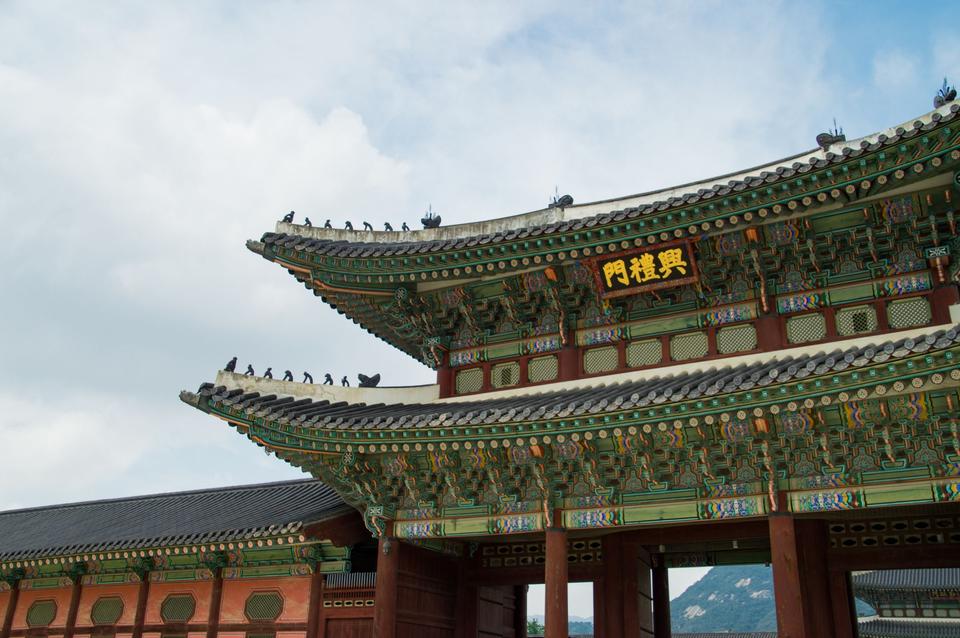
A private historian-guide leads Gyeongbokgung — the grandest of the Joseon palaces — alongside Changdeokgung and its UNESCO-listed Secret Garden, timed around the changing-of-the-guard and quieter hours, then continues on foot through the Bukchon Hanok quarter of tiled aristocratic houses.
Why The single best way to read Seoul's dynastic layer, with context and pacing that day-tour crowds never allow.
DMZ and the inter-Korean border, privately guided
Private guide and vehicle; JSA access by special arrangement and not guaranteedCultural
A full-day private run north to the Demilitarized Zone — Imjingak, the Third Infiltration Tunnel and the Dora Observatory looking across into the North — with a guide versed in the history and the politics. Access to the Joint Security Area at Panmunjom is intermittent and requires separate, advance arrangement.
Why The world's most heavily fortified border, an hour from the capital; a private guide turns a logistics-heavy outing into genuine understanding.
Bukhansan summit hike with a private mountain guide
Private guide; half- or full-dayAdventure
A guided ascent of Bukhansan, the granite massif rising directly above the city, taking in the 9th-century Doseonsa temple and stretches of the 18th-century Bukhansanseong fortress wall, with the whole metropolis laid out below from the ridgeline.
Why Few capitals offer a genuine mountain wilderness inside the city limits; a private guide tailors the route and pace and handles the trailhead logistics.
Korean spa and wellness ritual
By appointment; private treatment suites available at hotel spasWellness
A curated day moving from a hotel spa — the Guerlain Spa at The Shilla or the Four Seasons hammam-and-pool floor — into the traditional bathing-and-heat culture of the jjimjilbang, the deep-cleansing seshin scrub and the herbal hot rooms that anchor Korean wellness.
Why Pairs international spa polish with the authentic bathhouse ritual that locals consider essential maintenance, not indulgence.
Contemporary art and gallery circuit
Private art advisor; by-appointment gallery and collection viewingsCultural
A guided loop through the gallery clusters of Samcheong-dong and Hannam-dong — the MMCA, the Leeum Museum of Art and blue-chip dealers — and, in season, the September art-week fairs that have made Seoul a fixture on the international collecting calendar.
Why Seoul has become one of Asia's most serious art markets; a specialist guide opens doors and frames a fast-moving scene.
Hands-on hansik and market immersion
Private chef or guide; by appointmentCulinary
A private session with a chef or culinary guide covering the fermentation backbone of Korean cooking — jang, kimchi, temple cuisine — alongside a led walk through Gwangjang or Noryangjin markets, calibrated for travellers who want depth rather than a checklist.
Why Decodes the larder and technique behind the city's three-star kitchens, and makes the fine-dining tasting menus read far more clearly.
Shopping
The Maisons
Cheongdam-dong & Apgujeong
Korea's answer to Avenue Montaigne: a tree-lined stretch of Apgujeong-ro running from Galleria toward Cheongdam junction, dense with the standalone flagships of the major couture houses. Architecturally ambitious boutiques and the city's wealthiest postcode make this the address for serious shopping.
Galleria Department Store, Apgujeong
Korea's original luxury-only department store and the anchor of the Cheongdam strip, its West (Luxury) Hall consolidating the leading maisons under one roof with the personal-shopping and VIP-lounge service expected at the top tier.
Insadong & Bukchon (craft and antiques)
For those buying culture rather than couture: Insadong's lanes and the adjacent Bukchon hanok quarter hold the city's best concentration of ceramics, calligraphy, hanji paper, antiques and contemporary craft studios, alongside traditional teahouses.
By appointment
Hermès maison at Dosan Park, with its rotating exhibitions and café · Personal-shopping and VIP salons at Galleria, Shinsegae and Lotte Avenuel luxury halls · Made-to-measure hanbok and bespoke tailoring arranged through hotel concierges
Arrival & departure
Coming & Going
Airports
The principal long-haul and intercontinental gateway, consistently rated among the world's best airports, with full customs and immigration infrastructure but no dedicated business-aviation terminal. The AREX express rail reaches Seoul Station in about 45 minutes.
Far closer to the city and the preferred gateway for regional and private-jet arrivals from Northeast Asia. Home to SGBAC, Korea's only purpose-built business-aviation terminal.
Private terminals
- Seoul Gimpo Business Aviation Centre (SGBAC) at Gimpo — Korea's sole dedicated FBO, opened 2016, with its own parking, security lane, CIQ and VIP lounge
Meet & greet · gate escort
- Private meet-and-assist concierge providers operate at both ICN and GMP, greeting at the aircraft or arrivals and escorting through formalities
- Hotel chauffeurs and concierge teams coordinate airside-adjacent handovers where permitted
First-class & arrivals lounges
- Incheon's extensive airline first-class and flagship lounges (Korean Air, Asiana and partner carriers)
- Independent premium lounges across both ICN terminals
- VIP lounge within the SGBAC private terminal at Gimpo
Private transfers
- Chauffeured luxury sedans and vans (Mercedes S-Class, Genesis G90 and equivalents) via hotels and concierge services
- Direct hotel transfers from both airports; AREX express rail as a fast public alternative from ICN
Private aviation
- Business and private jets favour Gimpo (GMP/RKSS) and its SGBAC terminal for proximity and faster processing
- Incheon (ICN/RKSI) handles larger and long-haul private aircraft but lacks a dedicated business-aviation terminal
- Local operators including AVJET Asia and charter brokers handle ground handling and arrangements
Immigration fast-track
South Korea offers no official government fast-track immigration channel at Incheon; expedited clearance is delivered through private meet-and-assist concierge firms, with final priority at the discretion of immigration and security authorities. Arrivals via the SGBAC terminal at Gimpo clear through that facility's own CIQ.
Good to know
Questions & Answers
When is the best time to visit Seoul? +
Late September through early November, when the humidity breaks and the foliage on Bukhansan and around the palaces turns; mid-April for cherry blossom and mild, clear days. July and August are hot and monsoon-wet; December to February are cold and dry but uncrowded, and best for spa-led, indoor-leaning itineraries.
How many nights should you spend in Seoul? +
5 nights is the sweet spot; 3 at a minimum, and up to 7 if you want to take it slowly.
What are the best luxury hotels in Seoul? +
The Grand Index ranks 6 houses in Seoul. The ultra-premier tier: The Shilla Seoul, Signiel Seoul. Each is bookable through our advisor at the same rate as direct, with VIP perks layered on.
Which airport do you fly into for Seoul? +
Incheon International Airport (ICN); Gimpo International Airport (GMP).
Can I book Seoul hotels through The Grand Index? +
Yes. Our advisor books every house featured here through Fora, a Virtuoso member agency, at the same rate you would pay direct — with VIP perks such as room upgrades, daily breakfast and a property credit layered on at no extra cost. Begin at the enquiry page.
Where to next
You might also like
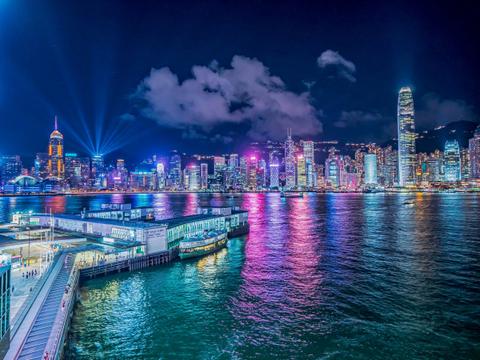
East Asia
Hong Kong
Hong Kong
A vertical city of harbour light, Cantonese mastery and quiet old-world service.
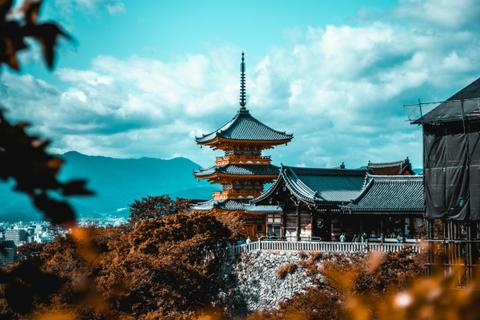
East Asia
Kyoto
Japan
The old capital, where imperial refinement and the world's deepest culinary tradition keep their own quiet hours.
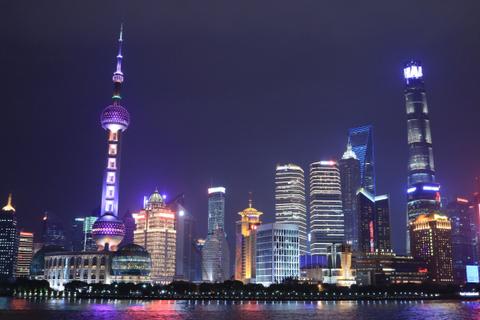
East Asia
Shanghai
China
China's most cosmopolitan city, where colonial-era Bund grandeur meets a skyline of glass and ambition.