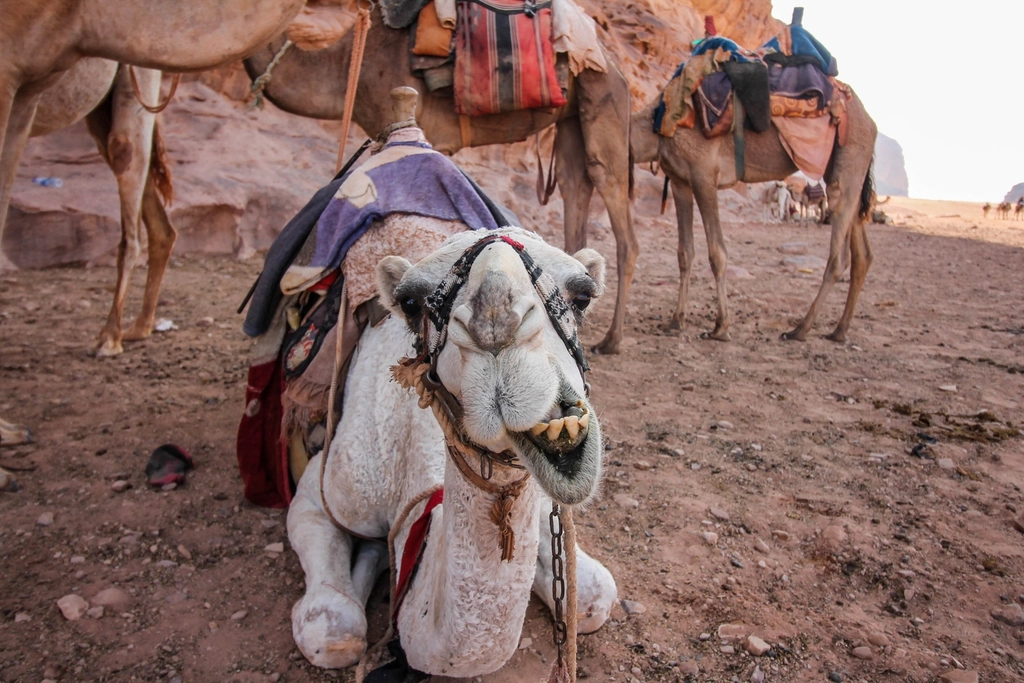
Middle East · Jordan
Petra & Wadi Rum
A rose-red Nabataean city and a desert that swallows the horizon — Jordan's two great theatres of stone and silence.
Plan this trip →- Suggested stay
- from 3 · 4 ideal · up to 6 nights
- Currency
- Jordanian dinar (JOD)
- Language
- Arabic, English
- Best season
- March to May and late September to November. Spring brings mild days, brief greenery and the year's clearest light; autumn is drier and quieter, with crisp visibility prized for photography. Summer is punishing (often above 35°C on the Petra trails and hotter still in Wadi Rum), and December to February turns cold, with cold desert nights and the occasional rain through the Siq. The shoulder months reward an early start: be at Petra's gate at opening, and reserve the desert for the gold of late afternoon.
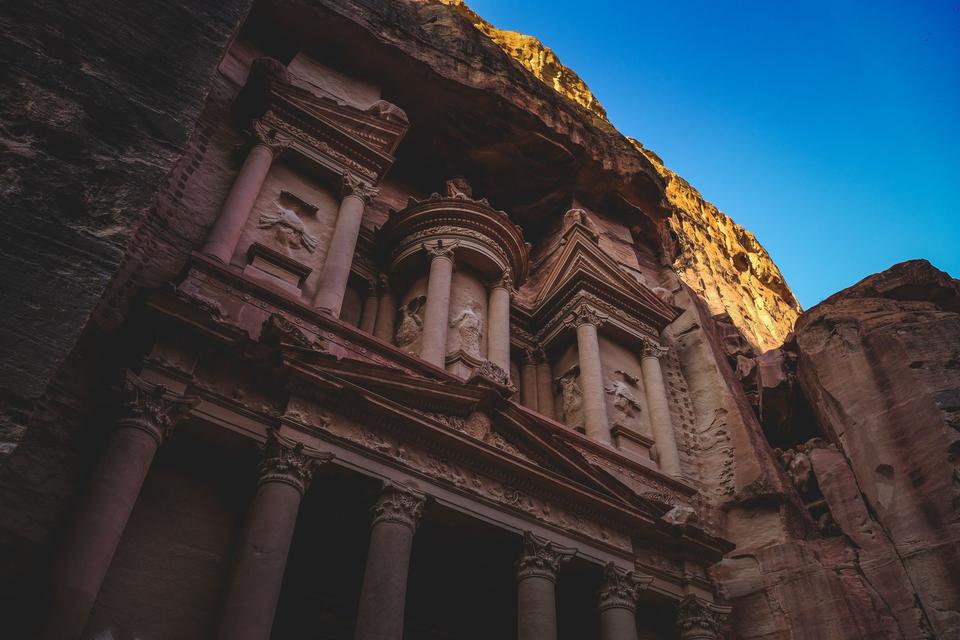
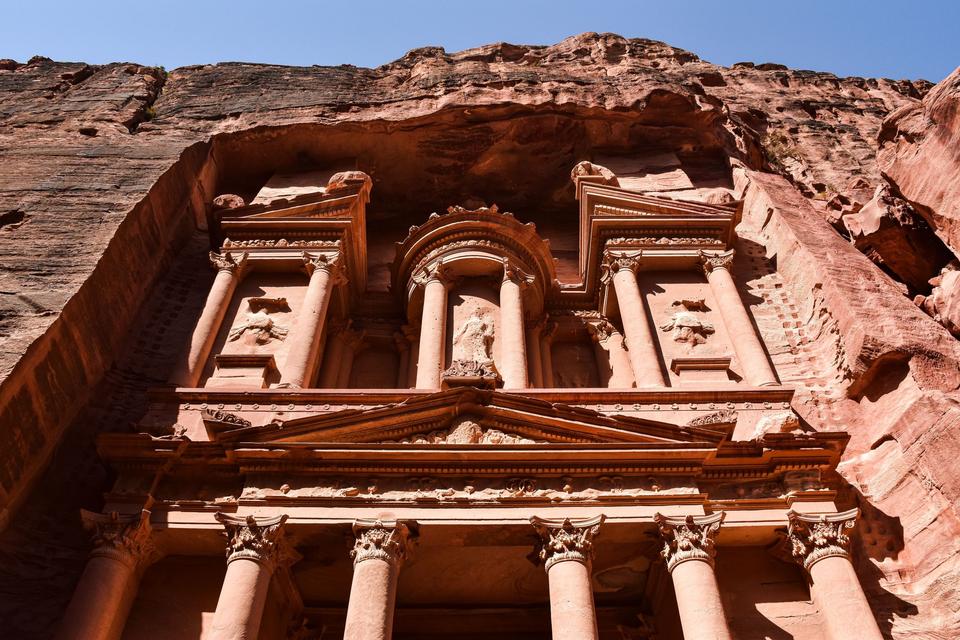
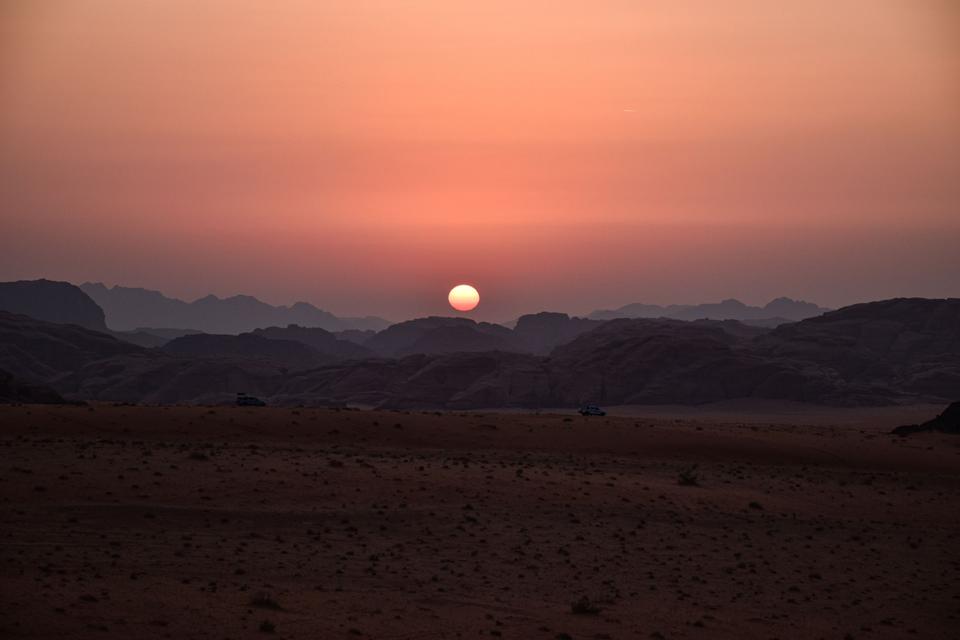
Two wonders sit within a short drive of one another in Jordan’s south, and together they make one of the most complete journeys in the Middle East. Petra is the older marvel: a Nabataean caravan capital carved into rose-and-amber sandstone, approached through the Siq, a kilometre-long fissure that opens, with theatrical suddenness, on the columned face of the Treasury. Beyond it lies a whole city in stone — royal tombs, a Roman-era street, a high place of sacrifice and, up 800 steps, the great Monastery. An hour and a half south, Wadi Rum is the counterpoint: a UNESCO-protected desert of towering jebels, wind-scoured arches and red dunes where T. E. Lawrence rode and where the silence is total.
The destination is best understood as a pairing rather than a choice. Petra demands legs and early mornings — be at the gate as it opens, walk the Siq before the day-trippers, and reserve the climbs for the cooler afternoon — while Wadi Rum rewards stillness, the long golden hour and the night sky. The luxury here is not of marble lobbies and Michelin stars; Jordan has neither a Michelin restaurant selection nor a tier-one resort operator in the south. It is instead the luxury of access and atmosphere: a private licensed guide who makes the ruins legible, a candlelit Treasury after dark, a six-suite camp angled to its own stretch of escarpment, a balloon lifting off into a violet dawn.
A considered stay splits its nights between the two. Base at the Petra gate for the archaeology — two days is the minimum to do the site justice and catch Petra by Night — then move into the desert for a contrasting register: a Bedouin guide, a 4x4 across the protected area, a zarb feast lifted from the sand, and a night under canvas with the stars uncovered. Aqaba’s King Hussein airport, forty minutes from Wadi Rum, is the discreet way in by private jet; most long-haul arrivals come through Amman and transfer south by road, helicopter or light aircraft.
Three to four nights is the sweet spot — enough for Petra’s depth and a genuine desert immersion without padding. Come in spring or autumn, when the light is clear and the trails are kind, and let the rhythm of the place set the pace: stone in the morning, sand at sunset, silence after dark.
Ideal for
Cultural travellers and history-minded couples · Photographers and stargazers · Active explorers who pair archaeology with desert adventure · Multi-generational families seeking a once-in-a-lifetime itinerary
In view
The Setting
Where to stay
The Houses
Discovery Bedu
Private tented desert camp · Deep Wadi Rum, away from the main camp clusters
An intimate, owner-run camp of just six Bedouin-style tented suites, each angled to its own private slice of the copper escarpments. Wooden floors, copper-sink en-suite bathrooms and solar power lend it the feel of a considered private retreat rather than a glamping site. Breakfast is carried to a sandstone rise behind camp; dinner follows Bedouin tradition under canvas or beneath open sky.
Why The most genuinely exclusive way to sleep in Wadi Rum — scale, siting and service that the larger dome camps cannot match.
Sun City Camp
Desert camp with Martian Domes · Wadi Rum, near Jabal Khash
The originator of Wadi Rum's now-ubiquitous 'Martian Domes' — German-made geodesic pods of around 40 square metres with glass walls framing the desert, air conditioning and private terraces. Beyond the twenty domes sit eight royal tents and traditional Bedouin canvas, with a strong kitchen and a polished operation that has matured into one of the valley's most reliable luxury stays.
Why The benchmark dome experience in Wadi Rum, run with more consistency and infrastructure than its many imitators.
Movenpick Resort Petra
Accor (Movenpick) · Five-star resort hotel · Wadi Musa, directly opposite the Petra archaeological park gate
The only full-service property standing at the very entrance to Petra — close enough to walk to the Siq before the coaches arrive. Stone-and-timber architecture, a domed atrium lobby, the Zara Spa and a rooftop with views toward the mountains make it the practical and comfortable base for the site itself.
Why Location is everything at Petra, and no other hotel of this standard puts you at the gate.
Petra Marriott Hotel
Marriott · Five-star resort hotel · Wadi Musa, on the ridge south of the park (a short drive from the gate)
Set high on the valley shoulder a few kilometres from the entrance, the Marriott trades gate-side immediacy for quiet, sweeping views over the Shara mountains. Recently refreshed rooms, several restaurants, a spa and a panoramic pool make it the calmer alternative for those willing to take the morning shuttle.
Why The best choice for travellers who prize a serene retreat and a view over proximity to the gate.
Where to dine
The Tables
The Cave Bar
Levantine and international, with mezze · Bar and casual restaurant in a Nabataean rock tomb
A drink and mezze inside a Nabataean tomb beside the Petra gate — atmosphere no new room can manufacture; book a private dinner for exclusivity.
Petra Kitchen
Traditional Jordanian · Evening cooking class and dinner
Cook the regional canon — maqluba, mezze, the spiced lamb of a Bedouin table — alongside local chefs, then dine on what you have made.
Al Qantarah
Jordanian · Traditional restaurant with nightly folklore
The reference point for a proper mansaf and the full Jordanian spread, served in a vaulted, lamp-lit room.
Zarb dinner at a Wadi Rum camp
Bedouin · Sand-pit barbecue feast
Lamb and vegetables slow-cooked underground in a desert oven and lifted from the sand at dusk — the one meal that defines a Wadi Rum night.
Three Steps Restaurant
Jordanian and international · Casual restaurant in Wadi Musa
A reliable, well-run kitchen for an unfussy dinner on a Petra evening when the hotel dining room palls.
My Mom's Recipe
Home-style Jordanian · Family-run restaurant
The antidote to hotel buffets — small, warm and genuinely home-cooked, the way the region actually eats.
What to do
Experiences
Private licensed guide through the Siq to the Treasury and Monastery
Private guide, arranged in advanceArchaeology / private guiding
A full day in Petra with a senior licensed guide, timed to reach Al-Khazneh (the Treasury) before the crowds and to climb the 800-odd steps to the Monastery in the cooler afternoon, with the Royal Tombs and High Place of Sacrifice woven in.
Why Petra rewards interpretation and pacing; a private guide turns a famous facade into a legible Nabataean city.
Petra by Night
Ticketed, scheduled evenings; pre-event private briefing possibleAfter-dark experience
The Siq and the Treasury forecourt lit by some two thousand candles, with Bedouin music and tea on the sand. Guides are not permitted to lead during the event itself, but a licensed guide can brief you beforehand and arrange the most considered approach.
Why The single most atmospheric hour in Petra — the canyon walls flickering, the Treasury emerging from the dark.
Sunrise hot-air balloon over Wadi Rum
Small-group or private charter at dawnAerial
A dawn ascent over the valley floor, drifting silently above the sandstone jebels, dunes and rock arches as the desert turns from violet to fire. Forty to sixty minutes aloft, launched in the dead-calm of first light.
Why The only way to grasp the true scale and geology of Wadi Rum — and the desert is at its most beautiful at sunrise.
Private 4x4 desert expedition with a Bedouin guide
Private vehicle and guideOverland exploration
A bespoke run across the protected area in an open 4x4 — Lawrence's Spring, the Khazali canyon petroglyphs, the great red dunes and natural rock bridges — pausing for tea brewed over a fire and the long golden hour among the formations.
Why Wadi Rum is a UNESCO-protected wilderness best read by those born to it; a private Bedouin guide opens the quiet corners away from the day-tripper circuit.
Guided desert rock climbing and scrambling
Private certified guideAdventure
Wadi Rum's sandstone offers everything from gentle Bedouin scramble routes to committing multi-pitch lines. A certified guide tailors the day to ability, from a scenic ascent of Jebel Burdah's rock bridge to harder objectives.
Why A storied climbing arena since the early expeditions — vertical perspective on a landscape most only see from the valley floor.
Camel trek and overnight under the stars
Private guide; arranged through your campSlow travel / stargazing
An unhurried camel ride to a remote bivouac, dinner around the fire and a night under one of the clearest skies in the Middle East, far from any light. Wadi Rum's altitude and dryness make for exceptional stargazing.
Why The desert at its most elemental — the pace of the camel, silence after dark, and a sky undimmed by a single light.
Shopping
The Maisons
Wadi Musa town and the Petra gate approach
The shopping immediately around Petra is honest and modest: cooperative shops and stalls selling Bedouin silver, kufiyas, the region's coloured-sand bottles, olive-wood and Dead Sea cosmetics. The better buys are pieces with provenance rather than the mass souvenirs near the entrance.
Bedouin artisan stalls within Petra and Wadi Rum
Inside the archaeological park and at desert stops, Bedouin families sell hand-strung silver, beadwork and woven textiles. Quality is variable but the genuinely handmade pieces — and the encounter itself — are the point; bargaining is expected and good-natured.
By appointment
Made-to-order Bedouin silver and beaded jewellery commissioned through a camp host · Hand-woven goat-hair textiles and rugs sourced via a trusted local guide
Arrival & departure
Coming & Going
Airports
The closest gateway to both sites and the natural choice for arrivals into southern Jordan. Hosts private-jet handling, including a dedicated private-jet terminal operated by Jordan's general-aviation providers.
Jordan's principal international gateway, ~30 km south of Amman. Most long-haul travellers arrive here; from Amman a private transfer, helicopter or onward light aircraft to the south can be arranged.
Private terminals
- Private-jet / general-aviation terminal at Aqaba (AQJ)
- FBO and general-aviation handling at Amman Queen Alia (AMM)
Meet & greet · gate escort
- Airport meet-and-assist with expedited immigration via tour operators and hotels
- Guide or driver greeting at the Petra gate and Wadi Rum visitor centre
First-class & arrivals lounges
- Premium and airline lounges at Queen Alia (AMM)
- Lounge facilities at Aqaba (AQJ)
Private transfers
- Chauffeured 4x4 and luxury sedan transfers between Aqaba, Petra and Wadi Rum
- Open 4x4 Bedouin transfer from the Wadi Rum visitor centre into the desert camps
- Helicopter transfers between Amman, Petra and Wadi Rum arranged through Jordanian charter operators
Private aviation
- Private-jet charter into Aqaba (AQJ) — the most direct access to the south
- Light-aircraft and helicopter charter via Jordanian operators (e.g. Arab Wings) out of Amman
Immigration fast-track
Fast-track immigration and visa-on-arrival assistance is commonly arranged by operators and hotels; the Jordan Pass simplifies entry and includes Petra admission.
Good to know
Questions & Answers
When is the best time to visit Petra & Wadi Rum? +
March to May and late September to November. Spring brings mild days, brief greenery and the year's clearest light; autumn is drier and quieter, with crisp visibility prized for photography. Summer is punishing (often above 35°C on the Petra trails and hotter still in Wadi Rum), and December to February turns cold, with cold desert nights and the occasional rain through the Siq. The shoulder months reward an early start: be at Petra's gate at opening, and reserve the desert for the gold of late afternoon.
How many nights should you spend in Petra & Wadi Rum? +
4 nights is the sweet spot; 3 at a minimum, and up to 6 if you want to take it slowly.
What are the best luxury hotels in Petra & Wadi Rum? +
The Grand Index ranks 4 houses in Petra & Wadi Rum. The ultra-premier tier: Discovery Bedu. Each is bookable through our advisor at the same rate as direct, with VIP perks layered on.
Which airport do you fly into for Petra & Wadi Rum? +
King Hussein International Airport, Aqaba (AQJ); Queen Alia International Airport, Amman (AMM).
Can I book Petra & Wadi Rum hotels through The Grand Index? +
Yes. Our advisor books every house featured here through Fora, a Virtuoso member agency, at the same rate you would pay direct — with VIP perks such as room upgrades, daily breakfast and a property credit layered on at no extra cost. Begin at the enquiry page.
Where to next
You might also like
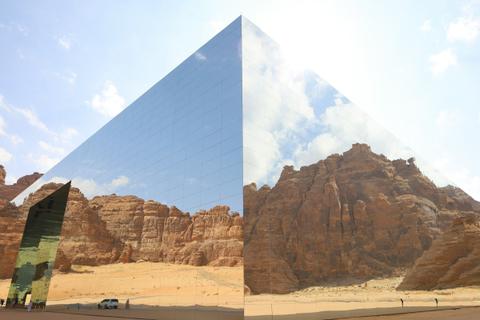
Middle East
AlUla
Saudi Arabia
An open-air museum of Nabataean tombs and sandstone canyons, now the Arabian Peninsula's most considered luxury frontier.
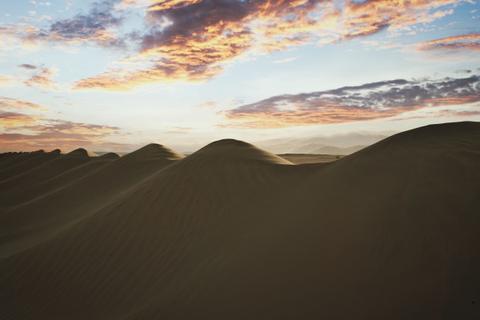
Middle East
Oman: Muscat & the Hajar Mountains
Oman
Arabia with the volume turned down — frankincense coast, fortress towns, and a green mountain on the rim of a canyon.
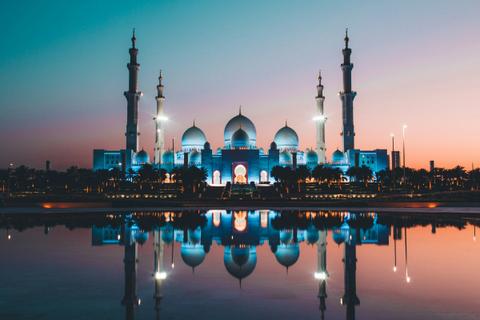
Middle East
Abu Dhabi
United Arab Emirates
The Gulf's quiet capital of art, sand, and considered luxury.