Africa · Namibia
Sossusvlei & Damaraland
The oldest desert on earth, distilled into silence, dune light, and the rarest desert wildlife.
Plan this trip →- Suggested stay
- from 5 · 7 ideal · up to 10 nights
- Currency
- Namibian dollar (NAD); South African rand (ZAR) accepted at par
- Language
- English, Afrikaans, German, Oshiwambo, Damara/Nama
- Best season
- May to October, the cool dry winter. June and July deliver the crispest air and longest dune shadows for photography, with cold nights (3–7°C) and mild days (20–28°C); September and October warm sharply but stay dry. The green summer (November–April) brings heat above 40°C and occasional dramatic storms — the only window the Sossusvlei pan may briefly hold water, but conditions are far less comfortable.
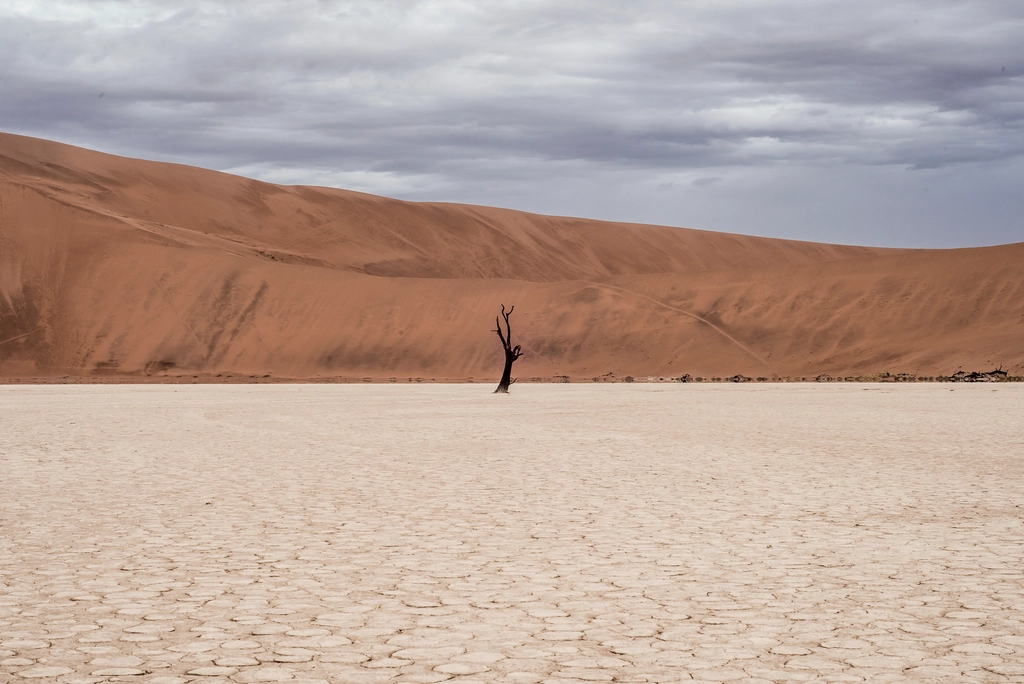
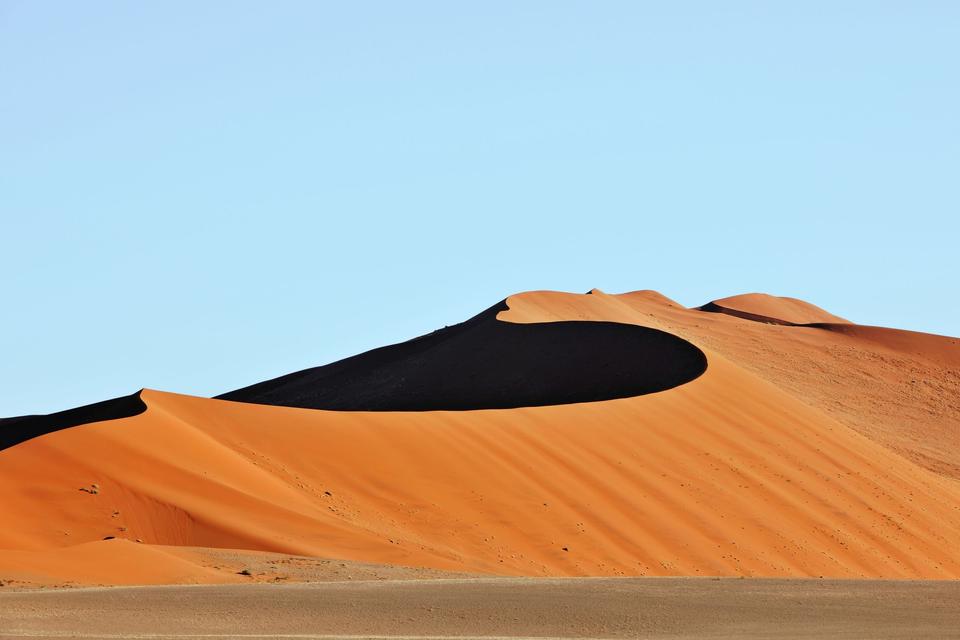
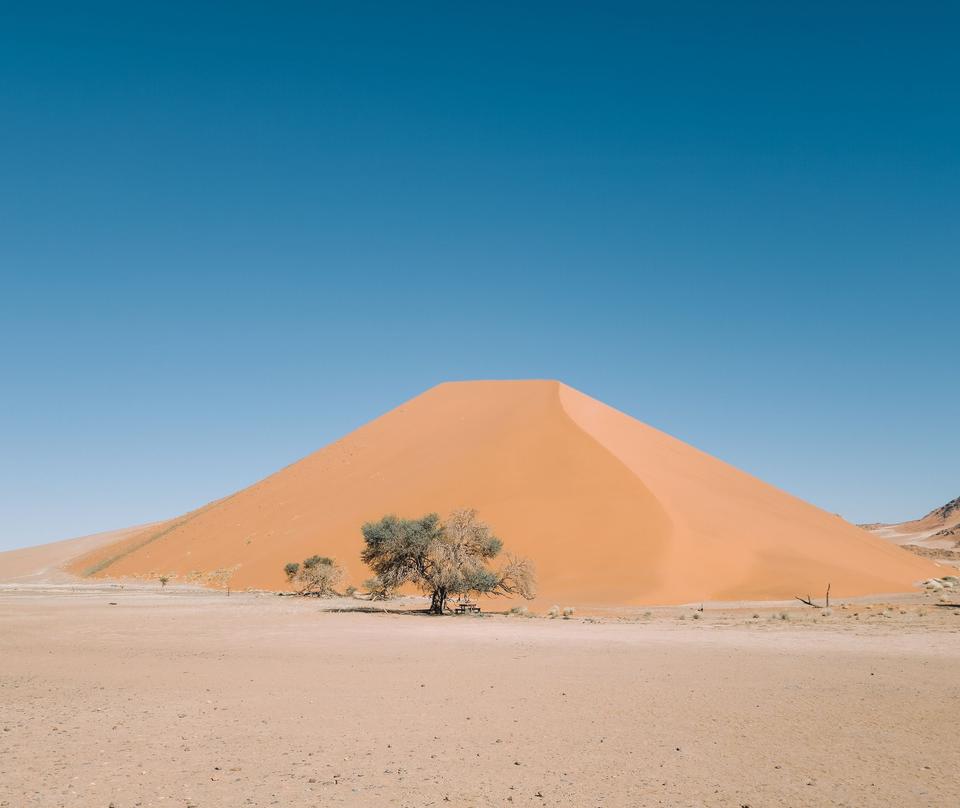
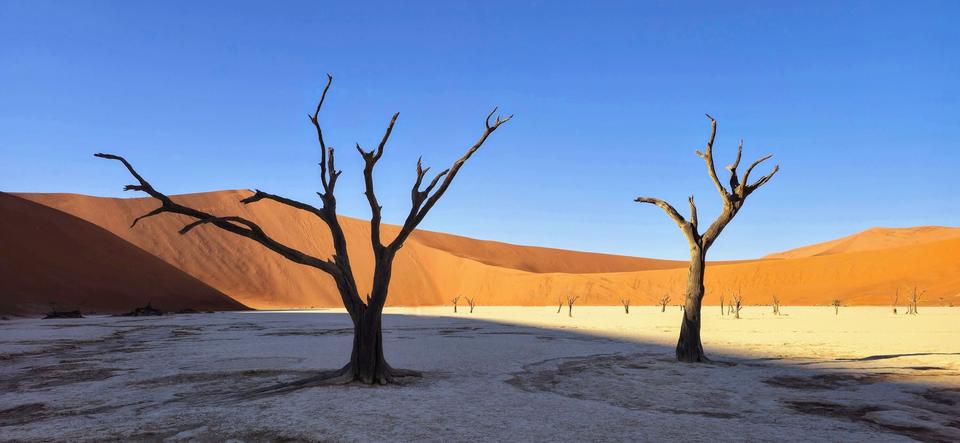
Namibia’s desert south and its wild northwest are two faces of the same astonishing emptiness, and together they make one of the last places on earth where luxury means genuine solitude rather than scale. Sossusvlei is the postcard: a sea of apricot dunes, some of the tallest on the planet, rising from the gravel plains of the Namib — the oldest desert in the world — with the white clay pan of Deadvlei and its blackened, 900-year-old camelthorn trees at its heart. Damaraland, to the northwest, is rawer and stranger: basalt mountains, ephemeral rivers, ancient rock engravings, and a cast of desert-adapted wildlife — elephant, lion, black rhino, giraffe — that should not, by any logic, survive here, and yet does.
The country is best experienced slowly and by air. Distances are vast and the roads are long, so the discerning way through is the fly-in safari: a light aircraft from Windhoek’s Eros field to a private gravel strip, a 4x4 waiting in the heat haze, and a handful of nights in each landscape rather than a frantic loop. A complete stay pairs the dunes with the desert wilderness — three or four nights at Sossusvlei for the great pans and the dark skies, then onward to Damaraland or the remote Hoanib for the wildlife and the silence.
The rhythm is dictated by light and temperature. Days begin before dawn, when the dune shadows are at their longest and the air is cold and glass-clear; the heat of midday is for the plunge pool, the shaded sala and a long lunch; the late afternoon returns to the sand for sundowners, and the night belongs to the stars — these are among the darkest skies anywhere, certified and protected. There is little to buy and nothing to rush toward. The reward is precisely that absence: scale, quiet, and a sense of deep geological time that no other destination delivers quite so completely.
Ideal for
Photographers and design-minded romantics · Conservation-minded safari purists · Honeymooners seeking remoteness and silence · Astronomy and dark-sky enthusiasts
In view
The Setting
Where to stay
The Houses
andBeyond Sossusvlei Desert Lodge
andBeyond · Desert design lodge · Private concession bordering the NamibRand Nature Reserve, near Sossusvlei
Ten stone-and-glass suites strung along an escarpment, each with a retractable skylight above the bed, a private plunge pool, fireplace and glass-encased rain shower with 180-degree desert views. The lodge borders Africa's first International Dark Sky Reserve and runs a serious nightly stargazing programme with a resident astronomer.
Why The most architecturally accomplished base in the dune country, paired with the finest dark-sky stargazing in Africa.
Wilderness Little Kulala
Wilderness · Tented desert villa · Private 37,000-hectare Kulala Wilderness Reserve, Sossusvlei
Eleven thatched 'kulalas' on the private Kulala Wilderness Reserve, each with a plunge pool and a rooftop skybed reached by an internal staircase for sleeping out under the Namib sky. The reserve holds a private gate into the Namib-Naukluft Park, so guests reach Deadvlei and the great dunes ahead of the day visitors.
Why Unmatched private dune access plus the intimacy of just eleven villas — the connoisseur's Sossusvlei address.
Wilderness Hoanib Skeleton Coast Camp
Wilderness · Remote tented camp · Northern Damaraland / Kaokoland, near the ephemeral Hoanib River
Eight solar-powered tented suites in one of the most isolated corners of the continent, reachable only by light aircraft. The camp's on-site research centre tracks desert-adapted elephant, lion and brown hyaena, and excursions reach the wildlife-strewn Hoanib floodplain and the roaring dunes near the Skeleton Coast.
Why The most remote luxury in Namibia, and the rare place to encounter desert-adapted megafauna in near-total solitude.
Onduli Ridge
Ultimate Safaris · Boulder-perched camp · Private concession, central Damaraland, with views to the Brandberg
Six partially open-air suites set among granite boulders, looking across the plains to the Brandberg, Namibia's highest peak, and cathedral-like inselbergs. The camp is fully solar-powered with a deliberately minimal footprint, and pairs naturally with desert-elephant tracking and ancient rock-art outings.
Why Design-forward, owner-driven intimacy in the heart of Damaraland with some of the region's best long views.
Desert Rhino Camp
Wilderness · Conservation safari camp · 450,000-hectare Palmwag Concession, Damaraland
A minimalist camp in the vast Palmwag Concession, run as a collaboration between Wilderness and the Save the Rhino Trust. The signature activity is tracking the largest free-roaming population of desert-adapted black rhino on earth, on foot and by vehicle, alongside the conservation trackers who protect them.
Why The continent's premier desert black-rhino experience, with conservation credentials no competitor matches.
Wolwedans Desert Lodge
Wolwedans Collection · Eco dune lodge · NamibRand Nature Reserve, southern Namib
Built along a dune plateau in the privately held NamibRand Nature Reserve, with canvas-and-timber chalets that roll open to the desert in every direction. A founding member of the Global Ecosphere Retreats, Wolwedans is a benchmark for low-impact desert hospitality, with solar power and grey-water systems throughout.
Why The most romantic, conservation-led stay in the southern Namib, and a quieter alternative to the Sossusvlei cluster.
Where to dine
The Tables
andBeyond Sossusvlei Desert Lodge dining
Contemporary Namibian / international · Lodge fine dining
The most refined plate in the dune country, served beneath a glass-roofed dining room or out on the sand at dusk.
Wilderness Little Kulala dining
Modern South African / desert-inspired · Lodge dining
Polished, ingredient-led cooking and the option of a private dinner set among the dunes at golden hour.
Wolwedans Desert Lodge table
Farm-to-table Namibian · Eco-lodge dining
A genuinely sustainable kitchen drawing on its own gardens, served against one of the desert's great views.
Namib Sky champagne breakfast
Continental breakfast · Experiential / open-air
Sparkling wine and a full breakfast set on linen in the open desert after a dawn balloon flight — pure theatre.
Leo's at the Castle
French / international · Gourmet restaurant
Windhoek's most polished pre- or post-desert dinner, with a terrace over the city skyline.
The Stellenbosch Wine Bar & Bistro
Bistro / steakhouse · Wine bar and bistro
The capital's serious wine destination — the right stop on a transit night before flying into the dunes.
Joe's Beerhouse
Namibian / German game cuisine · Institution
Unpretentious and characterful — oryx, kudu and Namibian game in a setting that is part of the city's lore.
What to do
Experiences
Dawn balloon flight over the Namib
Small-group / private charter on requestScenic flight
A sunrise hot-air-balloon flight with Namib Sky Balloon Safaris over the dunes and gravel plains near Sesriem, drifting at varying heights for roughly an hour before a champagne breakfast laid out on the desert floor at the landing site.
Why The single most spectacular way to grasp the scale of the world's oldest desert, with a long-held perfect safety record.
Private sunrise at Deadvlei and Big Daddy
Private guide; early private-gate access from Little KulalaGuided dune excursion
A guided pre-dawn drive into the Namib-Naukluft Park to reach the cracked white clay pan of Deadvlei and its 900-year-old camelthorn skeletons as the first light strikes the towering dune Big Daddy, ahead of the day's crowds.
Why Photographers covet this light; private reserve gates put you on the pan while the public entrance is still closed.
Desert black-rhino tracking on foot
Guided with Save the Rhino Trust trackersWalking safari
Tracking the largest free-roaming population of desert-adapted black rhino on earth across the Palmwag Concession, on foot and by vehicle, alongside the conservation rangers who monitor each animal.
Why A rare, conservation-funding encounter with one of Africa's most endangered and elusive megafauna.
Desert-adapted elephant and lion tracking, Hoanib
Fly-in only; small-group with camp researchersGame drive / research experience
Following the ephemeral Hoanib River and its floodplain to find desert-adapted elephant, lion, giraffe and brown hyaena, often in the company of the camp's resident research team.
Why Megafauna survival in a hyper-arid landscape, witnessed in some of the emptiest country in Africa.
Astronomy with a resident astronomer
By arrangement at Sossusvlei Desert LodgeStargazing
Guided observation of the southern sky through a research-grade Celestron telescope at the lodge's observatory, on a concession bordering Africa's only International Dark Sky Reserve and its gold-tier night skies.
Why Among the darkest accessible skies on the planet, interpreted by a dedicated on-site astronomer.
Twyfelfontein rock art and Damaraland geology
Private guideCultural / heritage
A guided visit to the UNESCO-listed Twyfelfontein petroglyphs and the surreal geology of central Damaraland — the Organ Pipes, Burnt Mountain and the Brandberg massif — interpreting some of the oldest rock engravings in southern Africa.
Why Adds deep human and geological time to the wildlife narrative, with the continent's richest concentration of rock engravings.
Shopping
The Maisons
Lodge boutiques (Sossusvlei & Damaraland)
The camps and lodges keep small, well-edited boutiques — andBeyond, Wilderness and Wolwedans stock locally made textiles, conservation-linked craft and field-ready apparel. This is the honest extent of retail in the desert; volume is low and curation is the point.
Windhoek — Independence Avenue & Old Breweries Craft Market
The capital, the practical gateway, is where any meaningful buying happens: Namibian gemstones and jewellery, Karakul wool textiles and the Namibia Crafts Centre at the Old Breweries complex for community-made baskets, leather and beadwork.
By appointment
Private gemstone and diamond viewings in Windhoek (Namibian diamonds, tourmaline and other coloured stones) arranged through reputable jewellers · Karakul wool and Swakara textile sourcing via lodge concierge
Arrival & departure
Coming & Going
Airports
Namibia's primary international gateway and the long-haul arrival point; connect here to light aircraft for the desert. Ground handling is operated by Paragon (a joint venture with Ethiopian Airlines), which took over from Menzies Aviation in August 2023.
The light-aircraft hub from which the great majority of fly-in safaris to Sossusvlei, Damaraland and the Skeleton Coast depart.
Private and lodge-served gravel strips; Geluk serves Sossusvlei Desert Lodge and Kulala the Wilderness reserve. Scheduled seat-rate and private charters land here. (SZM is properly the Sesriem airstrip code; Geluk and Kulala are separate private strips.)
Private terminals
- No dedicated private-jet terminal; private and charter arrivals are handled airside at Hosea Kutako and at Eros for light aircraft
Meet & greet · gate escort
- Lodge representatives meet guests at the desert airstrips
- Tour-operator and DMC meet-and-assist available at Hosea Kutako on arrival
First-class & arrivals lounges
- Hosea Kutako international departure lounge
Private transfers
- Light-aircraft transfers via Wilderness Air, Scenic Air and Desert Air between Eros/Windhoek and the desert strips
- Lodge 4x4 transfers from airstrip to camp
- Helicopter charter available for scenic transfers and Skeleton Coast access
Private aviation
- Charter and fly-in operators based at Eros: Wilderness Air, Scenic Air, Desert Air and others operating Cessna Caravan-class aircraft
- Long-range private jets clear at Hosea Kutako (FYWH); confirm FBO/handling arrangements in advance
Immigration fast-track
Meet-and-assist immigration and baggage facilitation at Hosea Kutako can be arranged through a DMC or the lodge group.
Good to know
Questions & Answers
When is the best time to visit Sossusvlei & Damaraland? +
May to October, the cool dry winter. June and July deliver the crispest air and longest dune shadows for photography, with cold nights (3–7°C) and mild days (20–28°C); September and October warm sharply but stay dry. The green summer (November–April) brings heat above 40°C and occasional dramatic storms — the only window the Sossusvlei pan may briefly hold water, but conditions are far less comfortable.
How many nights should you spend in Sossusvlei & Damaraland? +
7 nights is the sweet spot; 5 at a minimum, and up to 10 if you want to take it slowly.
What are the best luxury hotels in Sossusvlei & Damaraland? +
The Grand Index ranks 6 houses in Sossusvlei & Damaraland. The ultra-premier tier: andBeyond Sossusvlei Desert Lodge, Wilderness Little Kulala, Wilderness Hoanib Skeleton Coast Camp. Each is bookable through our advisor at the same rate as direct, with VIP perks layered on.
Which airport do you fly into for Sossusvlei & Damaraland? +
Hosea Kutako International Airport (WDH); Eros Airport, Windhoek (ERS); Sossusvlei / Geluk & Kulala airstrips (SZM).
Can I book Sossusvlei & Damaraland hotels through The Grand Index? +
Yes. Our advisor books every house featured here through Fora, a Virtuoso member agency, at the same rate you would pay direct — with VIP perks such as room upgrades, daily breakfast and a property credit layered on at no extra cost. Begin at the enquiry page.
Where to next
You might also like
Africa
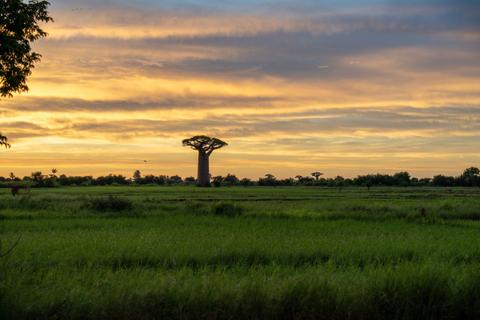
Madagascar
Madagascar
An island-continent where lemurs, baobabs and castaway shores reward those willing to travel far.
Africa
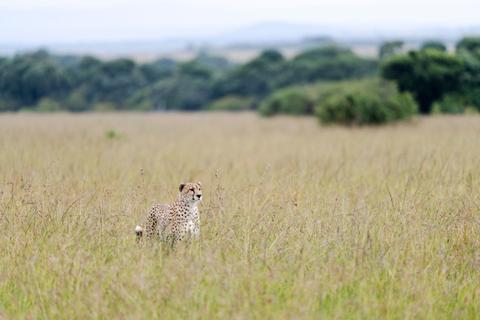
Masai Mara
Kenya
The Kenyan finale of the Great Migration, watched from the escarpment where a river decides who lives.
Africa
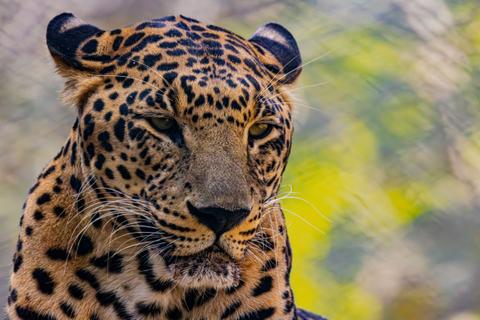
Sabi Sand
South Africa
The leopard capital of Africa, where the continent's most refined lodges share an unfenced wilderness with Kruger.