South Asia · India
Agra & the Taj Mahal
The world's most beautiful building, and a city that exists in its shadow.
Plan this trip →- Suggested stay
- from 1 · 2 ideal · up to 3 nights
- Currency
- Indian Rupee (INR)
- Language
- Hindi, Urdu, English
- Best season
- October to March, when the Indo-Gangetic plain cools and the light is clearest; November and February offer the most reliable sunrises over the mausoleum. December and January bring morning fog that can veil the Taj until mid-morning. April through June is punishingly hot (often above 42C) and the monsoon (July to September) brings haze and humidity. The monument closes on Fridays year-round.
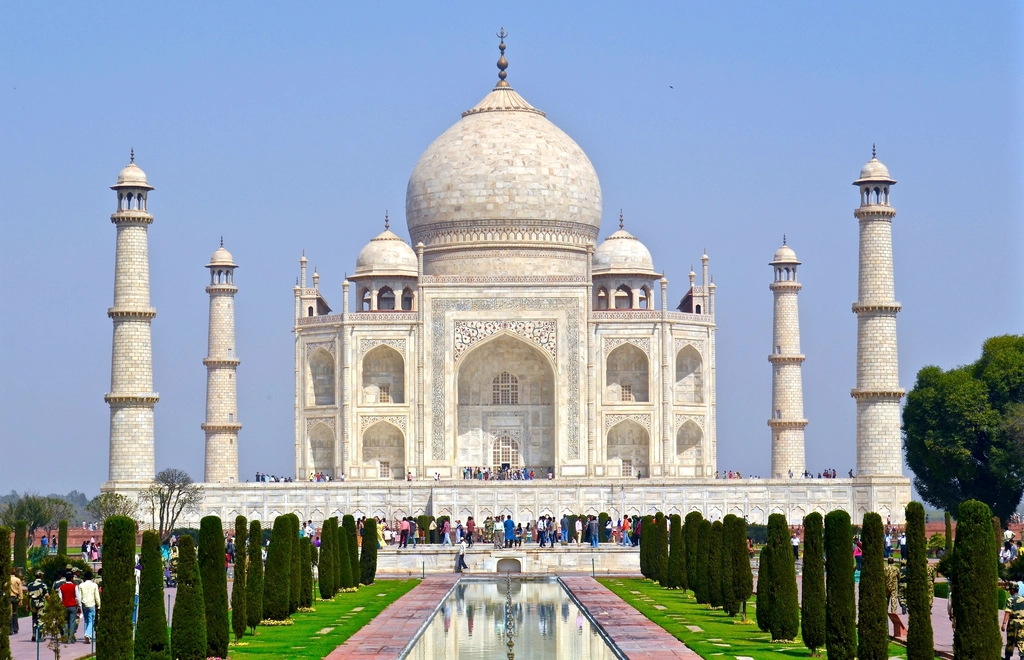
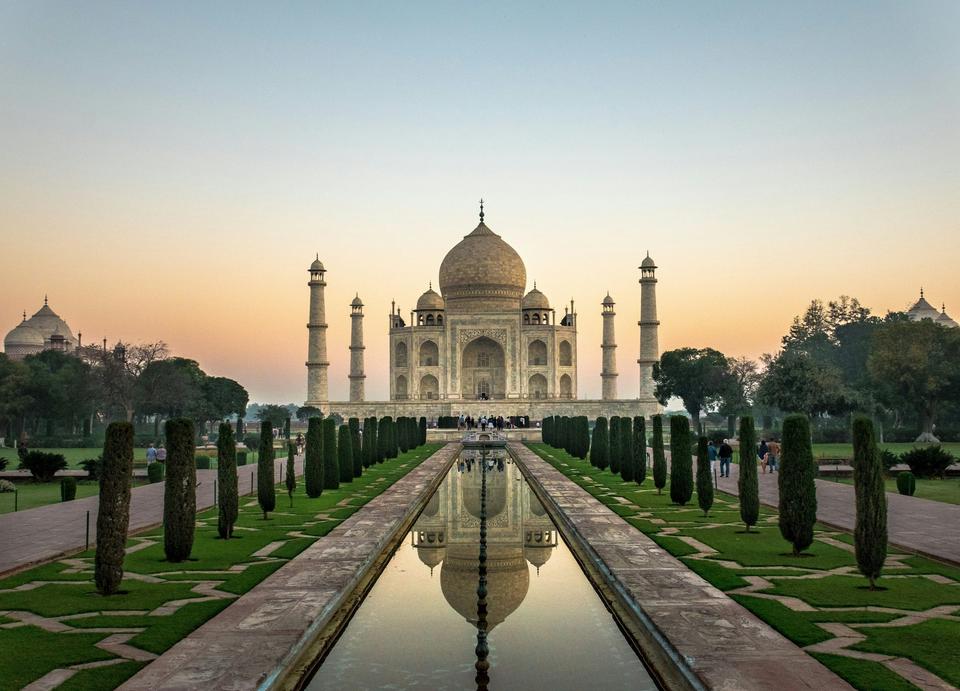
There is a particular danger in writing about the Taj Mahal, which is that everything true of it has been said, and most of it badly. The plain facts resist exaggeration: a white marble mausoleum raised by Shah Jahan for Mumtaz Mahal, finished around 1653, sitting on a plinth above the Yamuna with a symmetry so complete it reads less as architecture than as an argument made permanent. It is, by most measures that matter, the most beautiful building in the world, and the rare monument that survives the weight of its own reputation. Seen at dawn, before the haze and the crowds, it does the thing photographs cannot, which is to change colour and seem to breathe.
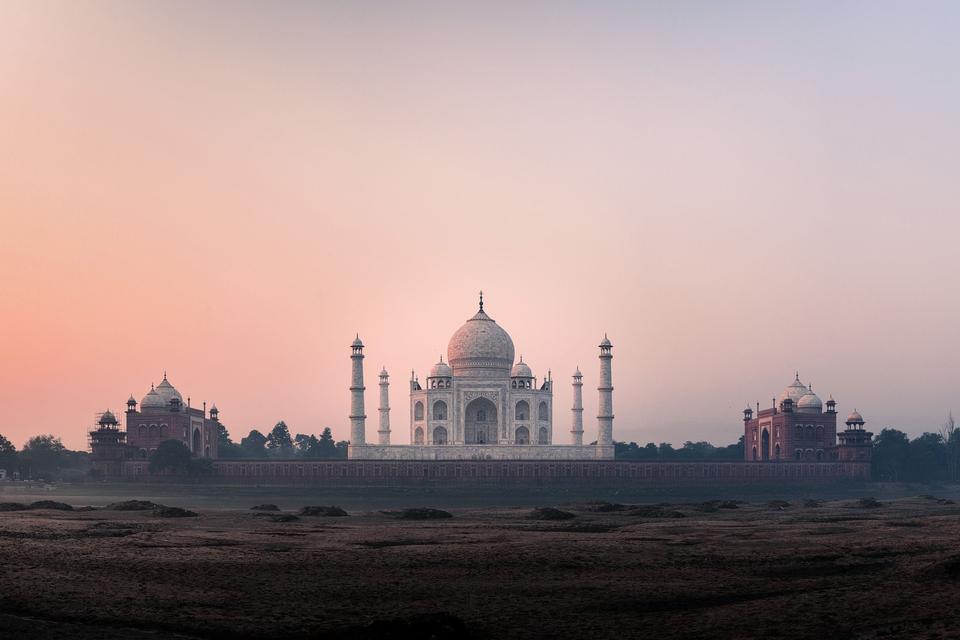
Agra, the city around it, is another matter, and honesty requires saying so. This was the Mughal capital under three emperors, and it still holds the red fort where Shah Jahan was imprisoned within sight of his wife’s tomb, the marble jewel-box of Itimad-ud-Daulah, and the empty perfection of Akbar’s Fatehpur Sikri an hour to the west. But the modern city is dense, dusty and hard-edged, geared to a tide of day-trippers who arrive from Delhi at sunrise and leave by lunch. The discerning traveller does the opposite: stays the night, takes the monument twice — once at dawn from within, once at dusk from across the river at Mehtab Bagh — and lets the rest of the Mughal city earn a full unhurried day.
The choice of where to stay shapes the whole experience. The Oberoi Amarvilas stands alone, six hundred metres from the east gate, with the monument framed from every room; it turns the Taj from an excursion into a companion. Beyond it, the ITC Mughal offers India’s most decorated hotel gardens and a serious spa, and a recently rebuilt Taj Hotel & Convention Centre brings the city’s most current rooms. Dining of real ambition is largely a hotel affair — Esphahan at the Amarvilas is the table that matters — with Pinch of Spice the honourable independent exception.
Getting there is its own logistics problem, and worth understanding before booking. Agra has no meaningful airport of its own; the practical gateway is Delhi, three to four hours by chauffeured car on the Yamuna Expressway or barely ninety minutes on the Gatimaan and Vande Bharat fast trains. Helicopters can be chartered but the Taj itself is a no-fly zone, so the marble is never seen from the air. For most, Agra is the keystone of a Golden Triangle with Delhi and Jaipur — a stop of one or two nights, not a destination in itself, and all the better for being approached that way.
Ideal for
First-time travellers to India · Architecture and history devotees · Couples on a milestone trip · Collectors of marble inlay and craft
In view
The Setting
Where to stay
The Houses
The Oberoi Amarvilas, Agra
The Oberoi Group · Grand palace-style resort · Taj East Gate Road, 600m from the Taj Mahal
The only hotel in Agra from which every room and suite faces the Taj Mahal unobstructed, set 600 metres from the monument's east gate. Built in the Mughal manner around terraced gardens, reflecting pools, fountains and colonnaded pavilions, it is the unambiguous address in the city. A short electric-buggy ride delivers guests to the gate ahead of the queues.
Why Nowhere else makes the Taj a constant presence rather than a day excursion.
ITC Mughal, a Luxury Collection Resort & Spa, Agra
Marriott (The Luxury Collection / ITC Hotels) · Garden resort and destination spa · Taj Ganj, roughly 1.5km from the Taj Mahal
Spread across 23 acres of Mughal-style gardens, the ITC Mughal is the only hotel in India to have won the Aga Khan Award for Architecture. Its Kaya Kalp – The Royal Spa is among the largest and most accomplished in the country, drawing on imperial bathing rituals. Dining centres on Peshawri, the much-imitated North-West Frontier grill.
Why The strongest wellness and architecture pairing in Agra, on grounds that earn their acclaim.
Taj Hotel & Convention Centre, Agra
Indian Hotels Company (Taj Hotels) · Contemporary luxury hotel · Taj Nagri, approximately 1km from the Taj Mahal
Recently and comprehensively transformed, the property now carries a sandstone facade and a central dome that nod to the monument a kilometre away, with 239 redesigned rooms and suites. A rooftop sky lounge and several infinity pools give it the most current public spaces in the city. The scale of its convention facilities means it can feel busy in season.
Why The freshest hardware in Agra for travellers who want a modern hotel over a heritage one.
Trident, Agra
The Oberoi Group (EIH Associated Hotels) · Garden hotel · Fatehabad Road, around 2km from the Taj Mahal
The Oberoi Group's more measured Agra address, set around landscaped courtyards, fountains and a central pool. The 135 rooms are calm and well-run, and the service carries the group's signature polish at a gentler register than the Amarvilas. It does not offer monument views, trading the spectacle for value and reliability.
Why The safest mid-tier choice in the city, run with quiet competence.
Where to dine
The Tables
Esphahan
Mughlai / North Indian · Fine dining restaurant
Recipes drawn from the imperial kitchens, served in two seatings only; the kitchen and the room both justify the difficulty of getting in.
Peshawri
North-West Frontier · Specialty grill
Charcoal-grilled kebabs and the celebrated Dal Bukhara at the restaurant that defined the genre across India.
Bellevue
Italian / International · All-day fine dining
The Amarvilas's European table, with wine pairings and a terrace that keeps the monument in view through dinner.
Daawat-e-Nawab
Awadhi / North Indian · Specialty restaurant
Slow-cooked Awadhi cooking — dum biryanis, kakori and galouti kebabs — in the city's most current dining room.
Pinch of Spice
North Indian / Mughlai · Independent restaurant
The strongest non-hotel option in town for robust Mughlai cooking, and a useful read on how Agra actually eats.
Mughal Room
North Indian / Continental · Rooftop restaurant
A piece of old Agra hotel-keeping with rooftop views; worth it for the vantage and the period atmosphere more than the kitchen.
What to do
Experiences
Private sunrise at the Taj Mahal
By arrangement; private guide and advance ticketingHeritage access
Arrival at the east gate before opening, with a private guide and pre-arranged skip-the-line entry, to reach the plinth as the first light moves across the marble. The dome shifts from grey to rose to white in the space of an hour, and the forecourt is at its emptiest. Hotels arrange buggy transfer to the gate and a guide versed in the inlay and calligraphy.
Why The single experience the city exists for, and immeasurably better at dawn before the crowds and the haze.
Mehtab Bagh at sunset
Open access; best with private car and guideGarden and viewpoint
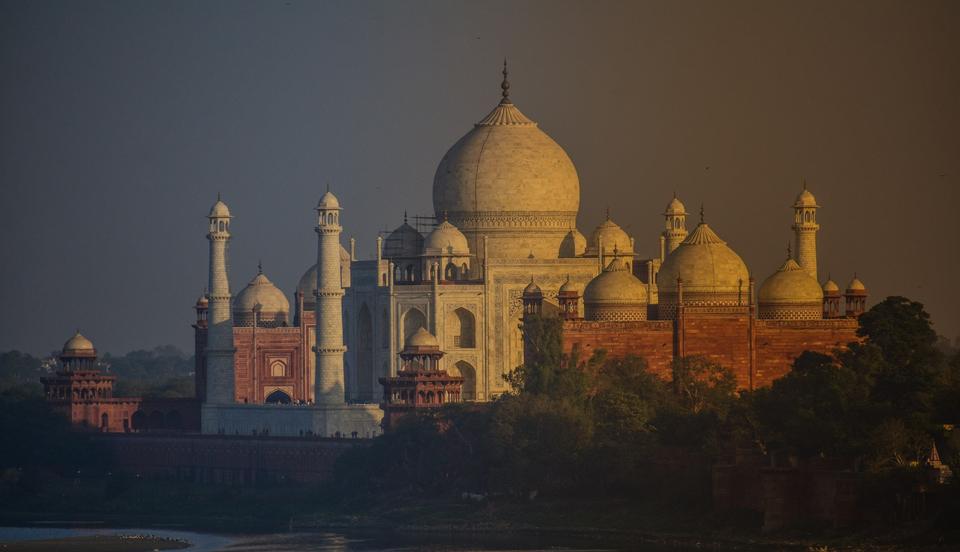
The Moonlight Garden sits directly across the Yamuna from the Taj, on the axis Shah Jahan's planners intended. As the sun drops the marble takes on warm gold and the river foreground empties of people. A private guide and car make it an unhurried counterpoint to the morning visit, from a vantage few day-trippers reach.
Why The finest view of the Taj that does not require entering it, and the right way to close the day.
Agra Fort, privately guided
Open access; private guiding recommendedHeritage site
The red-sandstone imperial fort, a UNESCO World Heritage Site, holds the palaces and audience halls of three Mughal emperors and the Musamman Burj where Shah Jahan was confined within sight of his wife's tomb. A knowledgeable guide turns a maze of courtyards into a coherent dynastic story. Early morning avoids both heat and groups.
Why The political heart of Mughal Agra, and essential context for the Taj across the river.
Itimad-ud-Daulah, the Baby Taj
Open access; private guiding recommendedHeritage site
The tomb of Mirza Ghiyas Beg, often called the Baby Taj, is the first Mughal structure built entirely of white marble and the prototype for the pietra dura that reached its summit at the Taj. Small, intricate and uncrowded, it rewards an unhurried hour. The riverside setting makes it a natural pairing with Mehtab Bagh nearby.
Why The aesthetic dress rehearsal for the Taj, and a quiet relief from the city's busier monuments.
Fatehpur Sikri day excursion
Open access; private car and guideHeritage excursion
Akbar's abandoned capital, a UNESCO World Heritage Site some 40km west of Agra, is among the best-preserved Mughal cities in the world — sandstone palaces, the vast Buland Darwaza and the Jama Masjid, deserted for want of water within decades of its building. A half-day with a private car and guide does it justice. Often combined with the drive to or from Jaipur.
Why A complete imperial city frozen at its 16th-century peak, and a worthy half-day beyond the Taj.
Marble inlay atelier visit
By appointment via conciergeCraft and provenance
Agra's master inlayers work semi-precious stones into white marble by the same pietra dura method used on the Taj. A vetted workshop visit, arranged through a hotel concierge rather than a commission-driven tout, shows the cutting and setting at the bench before any selling begins. Pieces of genuine quality can be commissioned and shipped.
Why The living continuation of the craft that built the monument, seen honestly rather than through a tour-bus storefront.
Shopping
The Maisons
Sadar Bazaar
Agra's principal pedestrian market, busiest in the evening, with the broadest spread of leather goods, marble inlay, jewellery and souvenirs. Lively rather than refined, and best approached with a guide and a clear sense of value; the better marble and craft are found at established ateliers off the main run.
Kinari Bazaar
One of the oldest markets in the old city, near the Jama Masjid, a warren of narrow lanes specialising in zardozi and aari embroidery, zari trimmings, fabrics and trinkets. Atmospheric and authentically chaotic — a place to absorb the working city as much as to buy.
Subhash Bazaar / Taj Ganj ateliers
The area near the Taj concentrates the marble-inlay and pietra dura workshops, including makers descended from the monument's original craftsmen, alongside silk and traditional dress. Quality and pricing vary enormously; a concierge introduction to a reputable atelier is the difference between a real heirloom and a tourist piece.
By appointment
Marble inlay and pietra dura ateliers (commissioned pieces, vetted via hotel concierge) · Bespoke zardozi embroidery and zari work
Arrival & departure
Coming & Going
Airports
The practical international gateway. The Yamuna Expressway is a fast, modern toll road; a chauffeured car is the standard transfer, around three to four hours depending on city traffic at the Delhi end. Most discerning itineraries pair Agra with Delhi and Jaipur as the Golden Triangle.
A civil enclave within an Indian Air Force station with only limited domestic service (a single carrier on a handful of routes as of 2026). Useful for occasional charters and private flights with advance military and aviation clearance, but not a dependable scheduled gateway.
Private terminals
- No dedicated private-aviation FBO; private and charter flights use the Kheria civil enclave with prior clearance
- Delhi (DEL) offers full FBO and general-aviation handling as the realistic private-jet entry point
Meet & greet · gate escort
- Hotel and tour-operator meet-and-greet at Delhi (DEL) arrivals
- Chauffeur greeting and luggage handling at the hotel on arrival in Agra
First-class & arrivals lounges
- Premium and oneworld/Star Alliance lounges at Delhi (DEL) for arriving and connecting passengers
Private transfers
- Chauffeured luxury car or SUV Delhi-Agra via the Yamuna Expressway (3-4 hours)
- Gatimaan Express / Vande Bharat fast trains Delhi-Agra (around 100-110 minutes) with a private car at each end
- Hotel electric-buggy transfer to the Taj Mahal east gate
Private aviation
- Helicopter charters Delhi-Agra land at Kheria (AGR); note the Taj Mahal sits within a no-fly zone, so aerial views over the monument are not permitted
- Fixed-wing charters into Kheria require advance Air Force and civil-aviation clearance (typically arranged days ahead)
Immigration fast-track
Skip-the-line and priority Taj Mahal ticketing arranged by hotels and private guides, including pre-arranged entry ahead of opening for sunrise visits.
Good to know
Questions & Answers
When is the best time to visit Agra & the Taj Mahal? +
October to March, when the Indo-Gangetic plain cools and the light is clearest; November and February offer the most reliable sunrises over the mausoleum. December and January bring morning fog that can veil the Taj until mid-morning. April through June is punishingly hot (often above 42C) and the monsoon (July to September) brings haze and humidity. The monument closes on Fridays year-round.
How many nights should you spend in Agra & the Taj Mahal? +
2 nights is the sweet spot; 1 at a minimum, and up to 3 if you want to take it slowly.
What are the best luxury hotels in Agra & the Taj Mahal? +
The Grand Index ranks 4 houses in Agra & the Taj Mahal. The ultra-premier tier: The Oberoi Amarvilas, Agra. Each is bookable through our advisor at the same rate as direct, with VIP perks layered on.
Which airport do you fly into for Agra & the Taj Mahal? +
Indira Gandhi International Airport, Delhi (DEL); Agra Airport (Kheria) (AGR).
Can I book Agra & the Taj Mahal hotels through The Grand Index? +
Yes. Our advisor books every house featured here through Fora, a Virtuoso member agency, at the same rate you would pay direct — with VIP perks such as room upgrades, daily breakfast and a property credit layered on at no extra cost. Begin at the enquiry page.
Where to next
You might also like
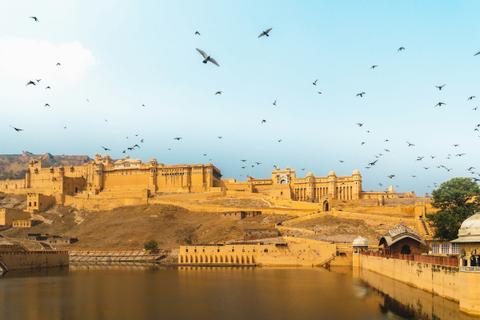
South Asia
Jaipur
India
The Pink City, where India's royal houses still keep court behind palace walls.
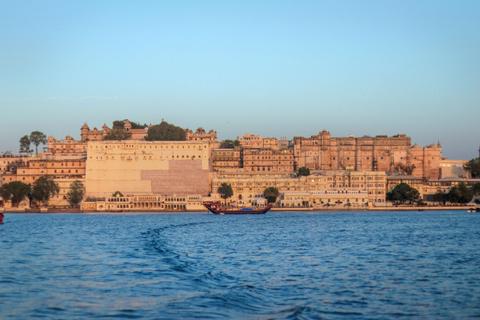
South Asia
Udaipur
India
The Venice of the East, where palaces float on Pichola and the Aravallis hold the silence.
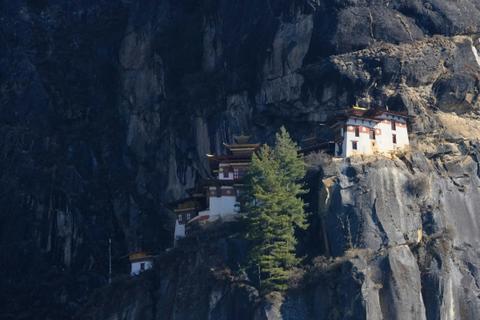
South Asia
Bhutan
Bhutan
The last Buddhist kingdom, guarded by mountains and measured in happiness.